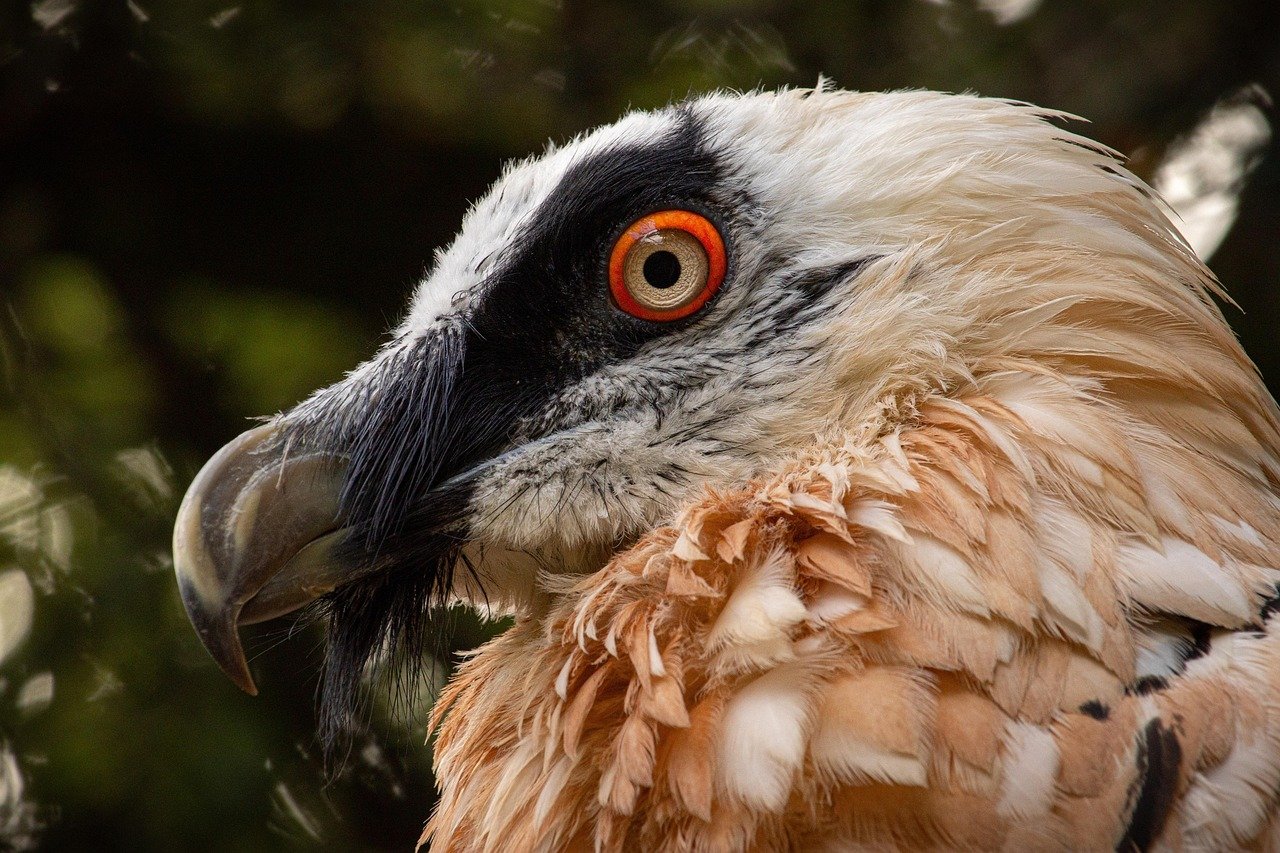
For much of the 20th century the bearded vulture — a specialist bone‑eating scavenger also called the lammergeier — had vanished from large parts of Europe. Concerted conservation work that began in the 1980s has turned that decline into one of the continent’s more hopeful wildlife stories: released birds have taken to the high cliffs again, pairs are nesting and, in recent years, hundreds of individual birds have been identified across the Alpine range.
A long program with measurable gains
The reintroduction effort began with targeted releases: captive‑reared juveniles were placed in Alpine national parks starting in the 1980s to rebuild a population wiped out by hunting and poisoning. Monitoring by an international network shows that these efforts are producing real demographic wins. The International Bearded Vulture Monitoring report for 2024 recorded a record number of wild fledglings in the Alpine region and used observation‑day data to place the population in the low hundreds range in the Alps alone.
National programs have mirrored that progress. In Switzerland, where releases and long‑term monitoring have been coordinated by research and conservation bodies, the species has gone from absent to dozens of active breeding pairs. Those local gains help create the broader, connected population that conservationists are aiming to secure across mountain chains from the Pyrenees to the Balkans.
Why the bearded vulture matters — and how it survives
Bearded vultures occupy an unusual ecological niche: adults feed largely on bone and marrow. That specialization makes them important cleaners of mountain ecosystems, able to consume material other scavengers leave behind. Their diet and unusual feeding behavior — including dropping large bones onto rocks to break them — are well documented in the scientific literature and explain why protecting safe feeding areas and monitoring carcass availability matters for the birds’ survival.
But the recovery has not been effortless. Field reports and telemetry data show that human threats — collisions, poisoning and disturbance at nests — still cause mortalities. That fragility underlines why releases are only one part of the solution: long‑term protection of nest sites, safe food provisioning and cooperation with local communities and land managers are essential.
From the Alps to the Balkans: momentum and new footholds
Beyond the Alps, reintroduction projects have added new footholds. In 2025 a small group of chicks was ceremonially introduced in Bulgaria and placed in protected artificial nests as part of a national LIFE project and international partnerships; project managers described the event as a symbolic step toward reconnecting populations across Europe. Conservation organisations continue to release and monitor juveniles at sites across the continent — a sign the work is moving from establishing individuals to strengthening breeding and regional connectivity.
Conservationists describe the overall picture as cautiously optimistic: population estimates and yearly fledgling totals show a species that, while still vulnerable, is rebuilding where people have committed to protecting habitat, limiting disturbance and reducing avoidable deaths. For a bird once absent from many mountain ranges, the return of nesting pairs and growing numbers of wild‑hatched juveniles is a clear reason for optimism.
For readers who watch raptor cliffs or visit mountain parks: the bearded vulture’s comeback is a reminder that patient, science‑based conservation — paired with community engagement — can restore species that once seemed gone for good.