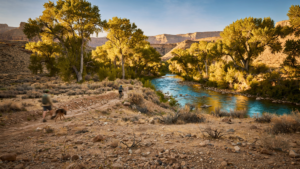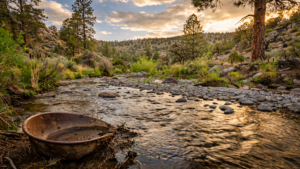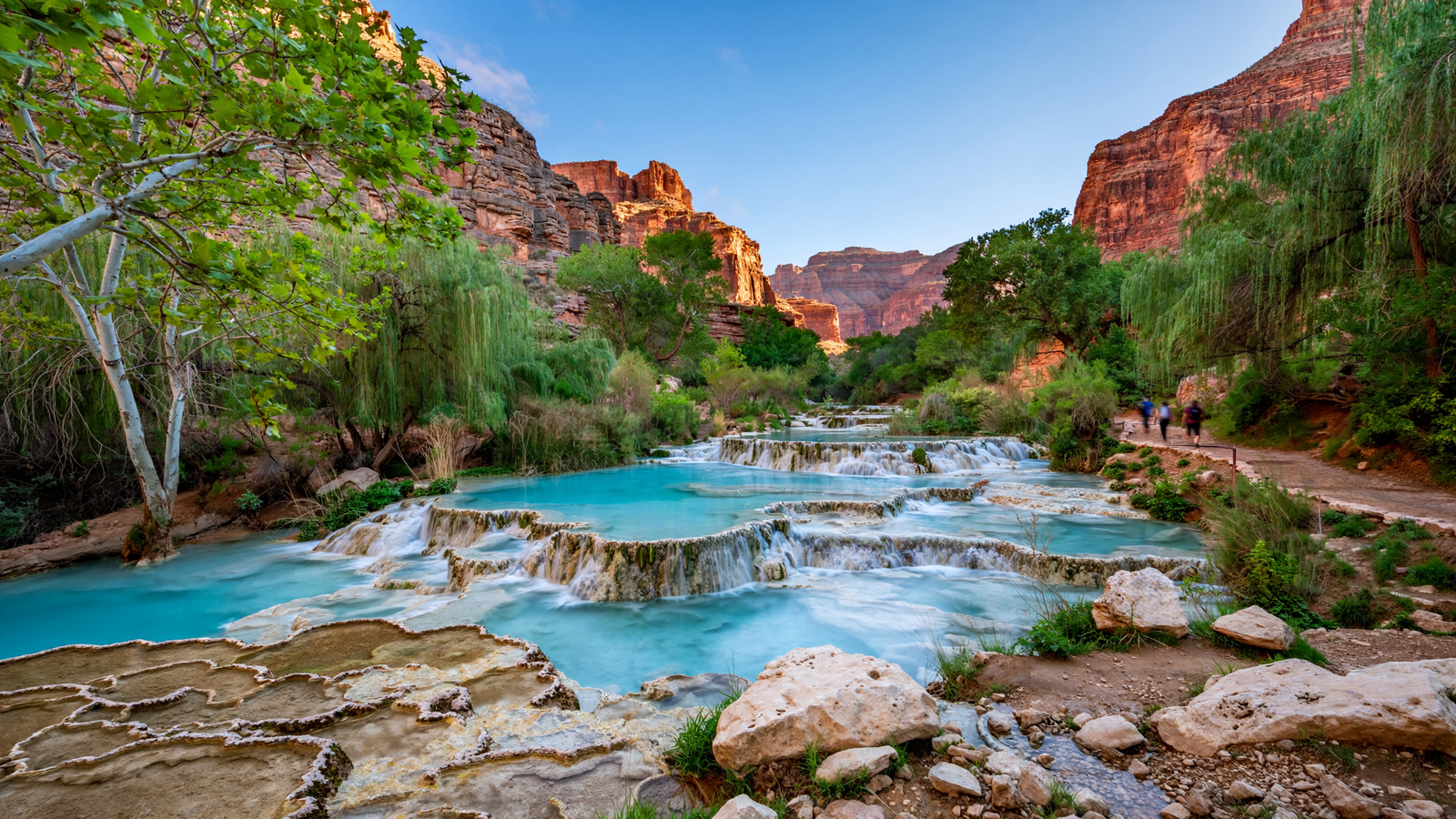
In Yavapai County, water can feel like an event. A spring appears in a dry canyon. Cottonwoods gather along a narrow ribbon of green. Travertine terraces glow beneath clear, moving water. The landscape around Fossil Creek is a reminder that the desert is not empty of water; it is shaped by water’s scarcity, persistence and power.
Fossil Creek is also a place where conservation has become visible in everyday decisions. Visitors cannot simply arrive at every popular swimming hole whenever they wish. During the busiest part of the year, access to the Fossil Creek Recreation Corridor is managed through a permit system. Roads, parking areas and camping opportunities are limited. Some areas are closed or restricted to protect sensitive habitat.
Those rules may sound like a barrier to recreation. At Fossil Creek, they are better understood as part of the river’s recovery story. The goal is not to keep people away from a remarkable Arizona landscape. It is to make sure that people can continue experiencing it without wearing out the very qualities that bring them there.
A river built by a powerful spring
Fossil Creek begins at Fossil Springs, a large natural spring on the eastern side of the Mazatzal Mountains. From there, the creek descends through a rugged canyon before joining the Verde River. The upper watershed lies in the Coconino National Forest, while the creek’s lower course and its meeting with the Verde connect the story directly to Yavapai County.
The name can be misleading. Fossil Creek is not primarily a place of exposed dinosaur fossils. Its identity comes from the calcium carbonate deposits that form as spring water moves through the canyon. Over time, those deposits create pale ledges, pools and terraces. The creek’s unusual color and clear flow come from the spring, geology and light working together.
Fossil Creek is designated as a Wild and Scenic River, a federal recognition reserved for waterways with outstanding natural, cultural, recreational or ecological values. The designation does not turn the creek into a museum display. It provides a framework for protecting the river’s character while allowing people to visit it.
That balance matters because Fossil Creek is both resilient and fragile. The spring produces a powerful flow, but the narrow corridor has limited room for roads, vehicles, campsites and people. A stream can carry a great deal of water and still be vulnerable to trampling, litter, human waste, unauthorized fires and the steady pressure of too many visitors in too small a space.
When energy infrastructure changed the creek
Fossil Creek’s modern conservation story is closely tied to an older industrial one. For much of the twentieth century, water from the creek was diverted for hydroelectric power. The Childs-Irving power system helped supply electricity to nearby communities, but the diversion reduced the amount of water remaining in the natural channel.
When the hydroelectric facility was retired and the diversion system was removed, water returned to the creek. The change was not simply symbolic. Restoring flow reopened habitat and allowed the river to behave more like a river rather than a channel receiving only part of its natural water.
Restoration did not erase the effects of decades of altered flow. Rivers remember disturbances through their channels, vegetation and wildlife communities. Recovery takes time, and it requires more than removing a structure. It also depends on keeping new pressures from overwhelming the recovering system.
That is why Fossil Creek’s story is not finished at the moment a dam comes down. The next chapter involves monitoring, maintenance, public education and decisions about how many people a particular road, trail or swimming area can safely accommodate.
Why limits are part of the welcome
The Forest Service manages Fossil Creek as a high-demand recreation area. During the peak season, visitors generally need a reservation or permit to enter designated areas by vehicle. The system is intended to control the number of cars reaching the corridor and to reduce the problems that once accompanied unmanaged visitation.
In practice, a permit system changes the rhythm of a visit. People have to plan ahead, read current conditions and understand which access point they have reserved. They may need to park in designated areas and walk farther than expected. They must also bring out trash and avoid creating informal campsites or trails.
These requirements can make a wild place feel more deliberate, but that deliberateness is part of the conservation benefit. When parking is uncontrolled, a popular creek can become a traffic problem before visitors ever reach the water. Vehicles compact soil, crush plants and expand the footprint of roads. Crowding concentrates human activity around fragile banks and pools. A reservation system gives managers a way to keep use closer to the capacity of the landscape.
It also gives visitors clearer expectations. A person who reserves a trip can learn about road conditions, seasonal closures, fire restrictions, water safety and the need to pack out waste. The experience begins before the trailhead.
A refuge for more than swimmers
Fossil Creek is famous for swimming, but recreation is only one part of the place. The creek corridor supports riparian vegetation in a landscape otherwise dominated by dry uplands. Willows, cottonwoods and other water-loving plants create shade and structure along the channel. That vegetation helps stabilize banks and offers habitat for birds and other wildlife.
The creek is also important for native fish and aquatic species. Fossil Creek has long been recognized for its biological diversity, including habitat associated with the threatened headwater chub and other native fish. Protecting the waterway therefore means protecting an ecological network, not merely preserving a scenic swimming hole.
Visitors may notice only the most visible part of that network: a clear pool, a travertine shelf or a stand of trees beside the road. The less visible work includes surveys, water monitoring, invasive-species management and efforts to keep human activity from damaging spawning areas or fragile stream edges.
This is one reason the best Fossil Creek visit is not necessarily the one that covers the most ground. A slower visit, made with attention to where people step, where they leave their vehicles and what they carry away, can have a smaller impact while offering a deeper sense of the landscape.
The practical work of protecting a popular place
Fossil Creek’s management challenges are familiar across the Southwest. Social media can turn a previously quiet site into a destination almost overnight. A photograph of turquoise water travels farther than information about road conditions, heat, flash floods or the difficulty of emergency response in a remote canyon.
At Fossil Creek, that gap between image and reality makes preparation especially important. The access roads can be rough, cell service may be limited and summer temperatures can be severe. Water that looks calm may conceal strong currents, slippery surfaces or sudden changes in depth. The Forest Service advises visitors to check conditions before leaving and to follow all current restrictions.
Good management cannot eliminate every risk, but it can reduce predictable damage. Designated parking keeps vehicles from spreading into vegetation. Seasonal rules protect the busiest areas when pressure is highest. Trail and site information helps visitors distinguish between a durable surface and a vulnerable one. Enforcement and education work together to make the rules meaningful.
There is an encouraging idea beneath all of this: access and protection do not have to be opposites. A public landscape can remain public while acknowledging that public use has consequences.
A model for the desert’s next chapter
Fossil Creek offers Yavapai County a particularly clear example of what restoration looks like after the ribbon-cutting is over. The river’s recovery is not a single achievement preserved in the past. It is an ongoing relationship among a spring, a canyon, wildlife, public agencies, local communities and visitors.
The creek also demonstrates why conservation success can be easy to misunderstand. A healthy place may not look untouched. It may have reservation signs, designated parking, closed routes and rules about where people can swim. Those visible controls are evidence that the landscape is being managed for a future longer than one busy weekend.
For visitors, the invitation remains generous but specific: plan carefully, follow the permit requirements, stay on established routes, protect the water and leave the canyon as close as possible to the way it was found. In return, Fossil Creek offers something rare in the desert—a chance to watch restoration in motion.
The creek’s clearest lesson is simple. A river does not need to be isolated to be protected. Sometimes protection means learning how to arrive with fewer vehicles, lighter footsteps and a greater willingness to let the place set the terms.
Use: Access rules, recreation management, visitor preparation and the Fossil Creek corridor.
Use: River protection, natural features, recreation guidance and management context.
Use: Federal designation and background on Fossil Creek’s outstanding natural and recreational values.
Use: Native fish habitat and conservation context for the Fossil Creek watershed.
U.S. Forest Service, Coconino National Forest — Fossil Creek — https://www.fs.usda.gov/recarea/coconino/recarea/?recid=75308 — Access rules, recreation management, visitor preparation and the Fossil Creek corridor.
U.S. Forest Service, Coconino National Forest — Fossil Creek Wild and Scenic River — https://www.fs.usda.gov/visit/fossil-creek-wild-and-scenic-river — River protection, natural features, recreation guidance and management context.
National Wild and Scenic Rivers System — Fossil Creek — https://www.rivers.gov/rivers/fossil-creek.php — Federal designation and background on Fossil Creek’s outstanding natural and recreational values.
U.S. Fish & Wildlife Service — Fossil Creek Native Fish Conservation — https://www.fws.gov/story/fossil-creek-native-fish — Native fish habitat and conservation context for the Fossil Creek watershed.