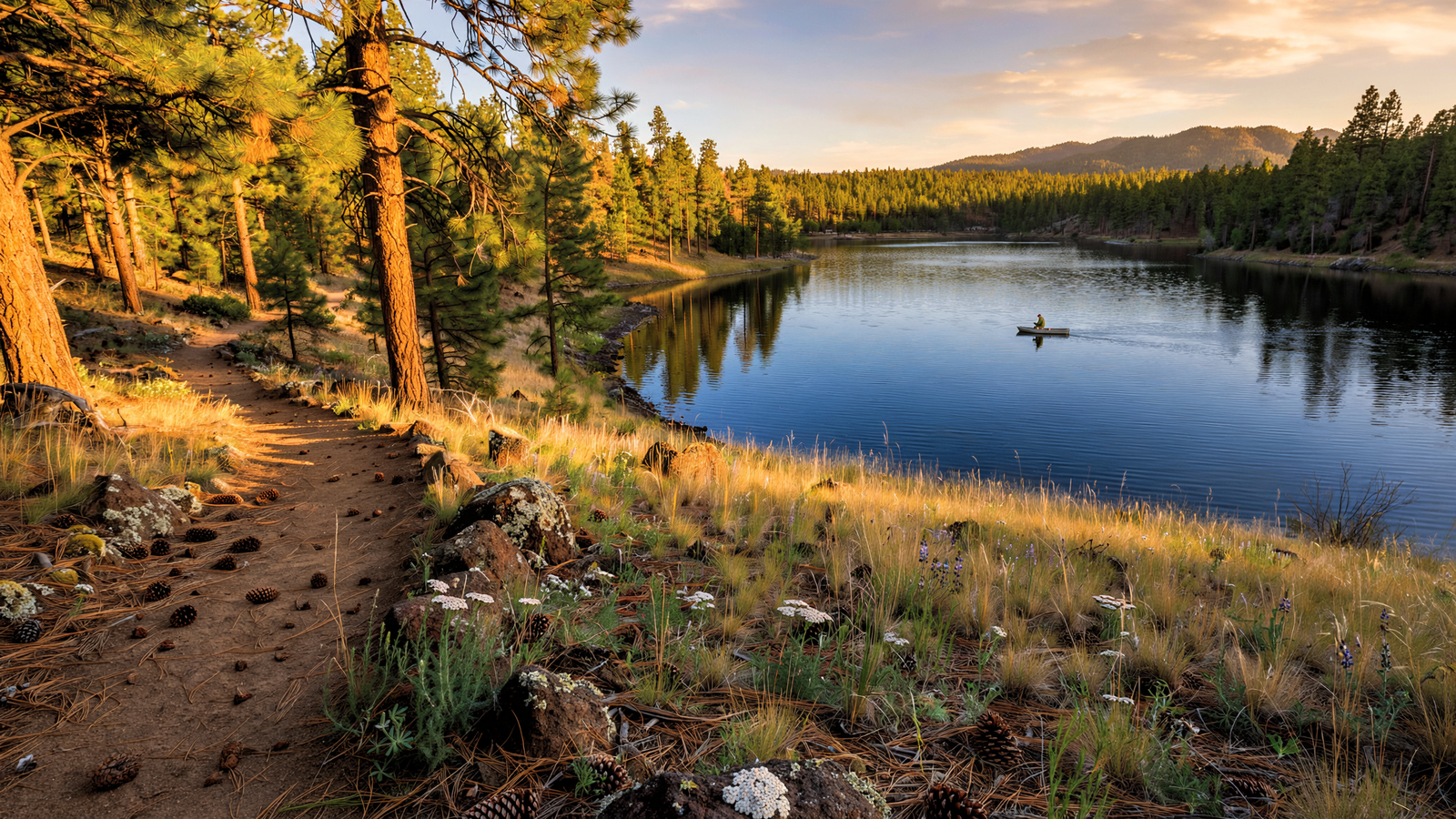
On the eastern side of Prescott, where the ponderosa pine forest begins to rise toward the Bradshaw Mountains, Lynx Lake offers a version of Arizona that feels both accessible and surprisingly wild. The drive from town is short, but the change in atmosphere is immediate: pavement gives way to forest roads, the air cools, and the sound of water begins to replace the noise of the city.
Lynx Lake is not one of Yavapai County’s most famous destinations. It does not have the archaeological drama of Montezuma Castle or the red-rock identity of the Verde Valley. Its appeal is quieter. A small mountain reservoir, surrounded by the Prescott National Forest, it gives local residents and visitors a place to fish, walk, camp, watch birds and spend an ordinary day outdoors.
That ordinariness is part of the story. Lynx Lake shows how a public landscape can become valuable without being spectacular in the conventional sense. Its importance rests on repeated use: a family returning to the same picnic area, an angler checking the shoreline at dawn, a hiker following the water through the trees, or a visitor discovering that a forest does not have to be remote to feel restorative.
A mountain lake close to Prescott
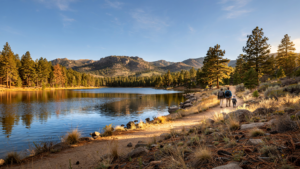
The lake sits within the Prescott National Forest, southeast of Prescott and near the community of Groom Creek. The U.S. Forest Service describes Lynx Lake as a recreation area surrounded by ponderosa pine, with opportunities for boating, fishing, camping, picnicking and hiking. Its elevation—roughly 5,600 feet—helps give the area a cooler, greener character than many visitors expect from Arizona.
The setting is especially significant in a state often described through its deserts. In and around Prescott, the landscape changes with elevation. Granite, oak, juniper and ponderosa pine create a series of ecological transitions, and Lynx Lake sits within one of the most recognizable of them: an upland forest where water gathers among tall trees.
The lake itself is modest in size, but its surroundings make it feel larger. Trails follow portions of the shoreline and extend into the forest. Campsites and day-use areas provide places for longer visits, while the road network makes the area reachable for people who may not be prepared for a demanding backcountry trip.
That combination—close enough for a day trip, substantial enough for a change of scenery—has made Lynx Lake a familiar part of life around Prescott. It is a place where outdoor recreation does not need to be an expedition.
Water gives the forest a center
Without the lake, the surrounding forest would still be attractive. The water changes how people move through it. Shorelines naturally slow visitors down. They invite people to stop, look outward and notice details that might be missed on a faster trail: the reflection of pine trunks, ripples from a fish, the movement of waterfowl or the changing color of the hills.
The Forest Service identifies fishing as one of the area’s main activities, and the lake is managed as a warm-water fishery. Arizona Game and Fish Department regulations and stocking information help shape what anglers can expect from public waters across the state. At Lynx Lake, fishing is not only a recreational pursuit; it is one of the ways people develop a personal relationship with a landscape.
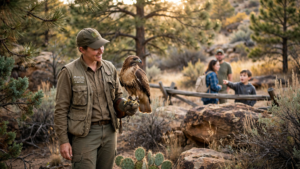
A lake also concentrates wildlife. Birds and other animals use the water and the vegetation around it, while the forest provides cover and nesting habitat. Visitors may not see wildlife on every visit, but the possibility is part of the experience. The lake’s value is not measured only by the number of boats launched or fishing lines cast. It also functions as a small meeting point between people and a living mountain ecosystem.
That relationship requires restraint. Visitors are asked to follow posted rules, keep campsites clean, respect fire restrictions and avoid disturbing wildlife. In a dry forest, everyday choices matter. A carelessly left campfire, a vehicle parked outside a designated area or trash left near the shoreline can affect a place used by thousands of people and inhabited by animals year-round.
A public landscape with many kinds of visitors
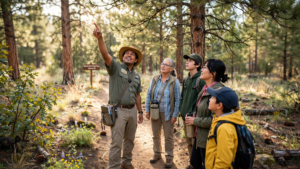
Lynx Lake works because it accommodates different forms of outdoor life without reducing the forest to a single purpose. Anglers may arrive before sunrise. Campers may settle in for a weekend. Families may come for lunch. Hikers may use the trails as a gentle introduction to the Prescott National Forest. Someone else may simply sit near the water for half an hour.
That range of uses is easy to overlook. Public recreation areas are sometimes judged by whether they offer a dramatic viewpoint, a difficult summit or a famous landmark. Lynx Lake offers something more democratic: a landscape that can be enjoyed at different speeds and levels of ability.
The result is a kind of shared outdoor room. The lake does not belong to one group of users. It is a place where solitude and sociability exist side by side, provided visitors give one another enough space. A person can walk alone along the shoreline while a few yards away a family prepares a meal or children watch the water.
This is one reason nearby public lands matter to communities such as Prescott. Not everyone has the time, money or equipment for a long wilderness trip. A well-managed recreation area makes contact with nature part of regular life rather than an occasional privilege. It gives people a place to return to across seasons and across stages of life.
The work behind an easy visit
A peaceful day at Lynx Lake can make the landscape appear effortless. It is not. Recreation sites require roads, toilets, signs, campgrounds, trash collection, trail maintenance, public information and enforcement of safety rules. The Forest Service must also balance human use with habitat protection, wildfire risk, water conditions and the health of the surrounding forest.
That work is especially important in the Prescott area, where drought and wildfire are permanent considerations rather than distant possibilities. Conditions can change quickly. Fire restrictions may affect whether visitors can use charcoal or campfires. Roads or facilities may close temporarily for weather, maintenance, public safety or resource protection. Checking current Forest Service notices before traveling is part of responsible recreation.
Forest management also shapes the experience. The ponderosa pine landscape is not untouched wilderness; it is a working public forest influenced by fire, past land-use decisions, road construction, recreation and ongoing stewardship. Managing such a place means accepting that the view may change. A prescribed burn, thinning project or temporary closure can be necessary even when it is inconvenient to visitors.
Seen this way, Lynx Lake is more than a destination. It is an example of the continuing bargain behind public lands: people receive access to beautiful places, while the public accepts rules and occasional restrictions intended to keep those places healthy and safe.
A place worth returning to
The strongest argument for Lynx Lake is not that it offers a once-in-a-lifetime experience. It is that the experience can be repeated. The lake looks different in early morning and late afternoon. Weather changes the color of the water and the smell of the forest. A quiet weekday visit can feel entirely different from a busy holiday weekend.
Repeated visits also create a more realistic understanding of a place. A first-time visitor may notice the lake. A returning visitor begins to notice the forest around it: where shade lasts longest, how seasonal conditions affect the shoreline, which birds appear near the water and how the trails connect the developed recreation areas with the wider national forest.
That familiarity can become a form of stewardship. People are more likely to care for places they know. They learn to pack out what they bring, to stay on designated routes, to keep pets under control and to recognize that recreation is possible because a landscape is being managed for the long term.
Lynx Lake does not need to become a major attraction to matter. Its strength is precisely its role as a dependable local landscape: a public place close to Prescott where water, forest and community meet. In a fast-growing region facing heat, fire and pressure on open space, that kind of everyday access is not a small benefit. It is part of what makes a county livable.
The next time the road climbs out of Prescott and the pines close around it, Lynx Lake offers a simple invitation. Slow down. Walk toward the water. Notice the forest. Then leave the place ready for the next person—and for the wildlife that was there before any visitor arrived.