For generations, choosing a house meant working with a local builder or adapting a plan already familiar in the neighborhood. Sears offered another possibility: browse designs in a catalog, select a model and order a package of building materials for delivery. Its Modern Homes program made the home itself part of mail-order shopping.
The program began in 1908, when Sears, Roebuck and Co. was already known for its thick catalogs of household goods, clothing and tools. Home catalogs presented designs in a range of sizes and styles, including bungalows and more formal, traditional-looking houses. Customers could compare plans on paper before deciding what might suit their family, budget and lot.
A catalog choice, not a finished house
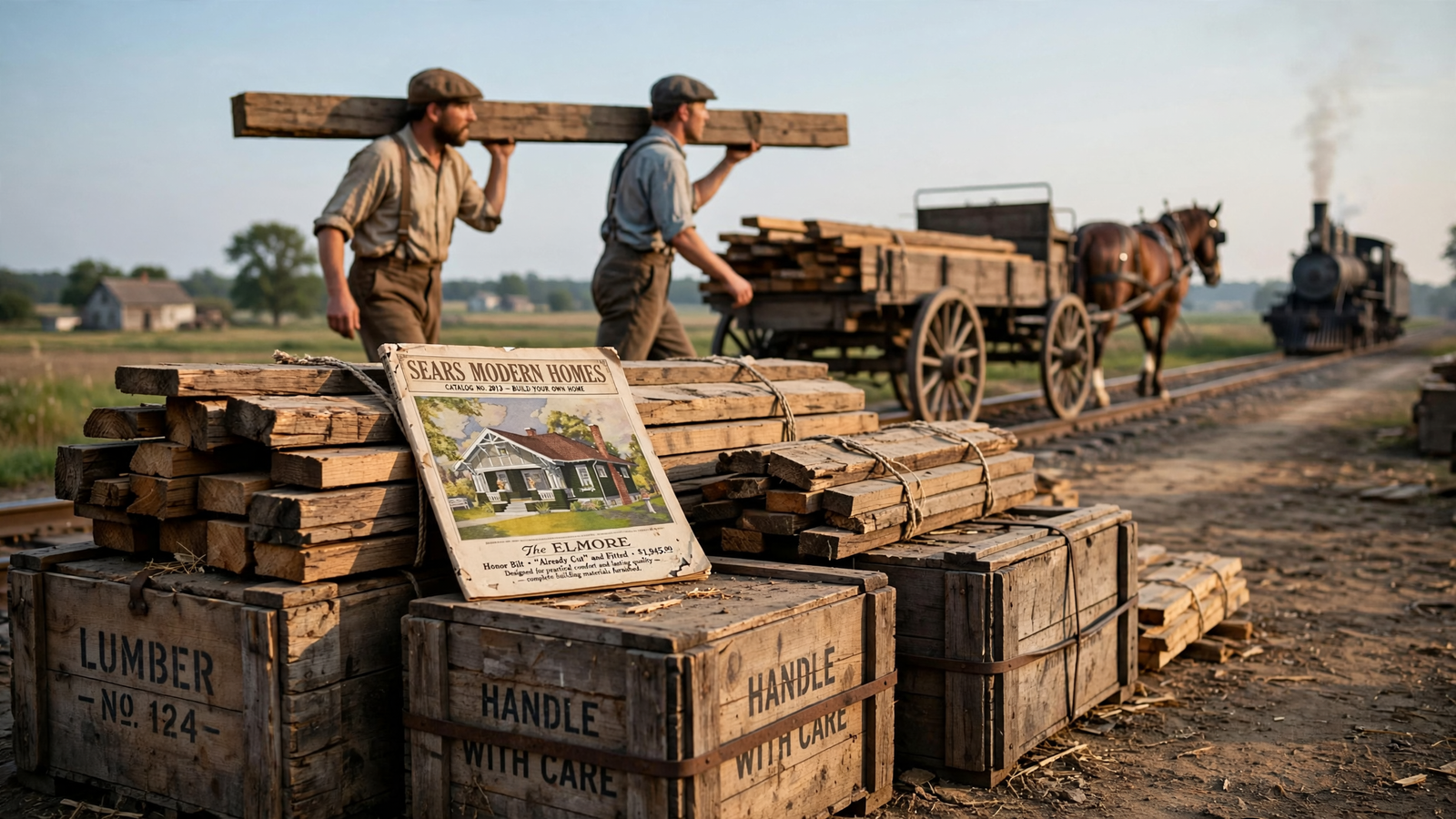
The phrase “mail-order house” can conjure an entire home arriving ready to occupy. Sears’ offering was more practical—and more demanding. The company supplied plans and building materials, shipped in packages that were generally transported by rail. Buyers still needed a site and the work of construction. Some hired a builder; others took on parts of the job themselves or relied on local help.
That distinction matters. Sears did not send a house that could simply be unpacked and lived in. Its system instead linked a national retailer to local building work. A catalog could make a design and its materials available beyond the towns where a particular architect or supplier operated, while the construction still depended on people and conditions at the destination.
Rail transport helped make the arrangement possible. Large quantities of lumber and other building supplies could travel to communities connected to the rail network, then move from a station to a building site. The delivery turned a familiar feature of American commerce—the freight shipment—into part of the process of making a home.
Making a home from a printed plan
The catalogs did more than show façades. They let prospective buyers imagine domestic life through a floor plan: where rooms connected, how much space a household might need and what kind of exterior would fit its preferences. The choice was not limitless, and a catalog picture could not settle every question about a particular lot or household. But it made comparison easier and gave buyers a concrete starting point for a major decision.
Nor did a mail-order design make every resulting home identical. Local workmanship, available materials, later renovations and the realities of a building site could all shape the finished house. A catalog model was a plan for a home, not a guarantee that every example would look exactly like the illustration decades later.
Sears ended its Modern Homes program in 1940. Its significance is not that it replaced local builders or made homebuilding effortless. Rather, it gave people a new way to enter the process: the house could begin as a choice made at a kitchen table, with a printed catalog, before materials crossed the country by rail and local work turned a plan into a place to live.
That is the enduring appeal of the story. The catalog brought a distant company into a deeply personal decision, but the home still took shape through local labor and the everyday choices of the people who would live there.