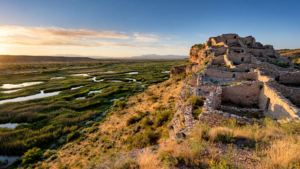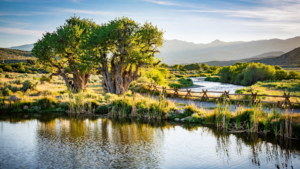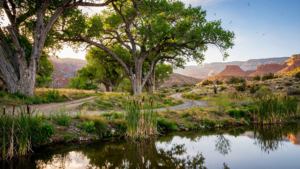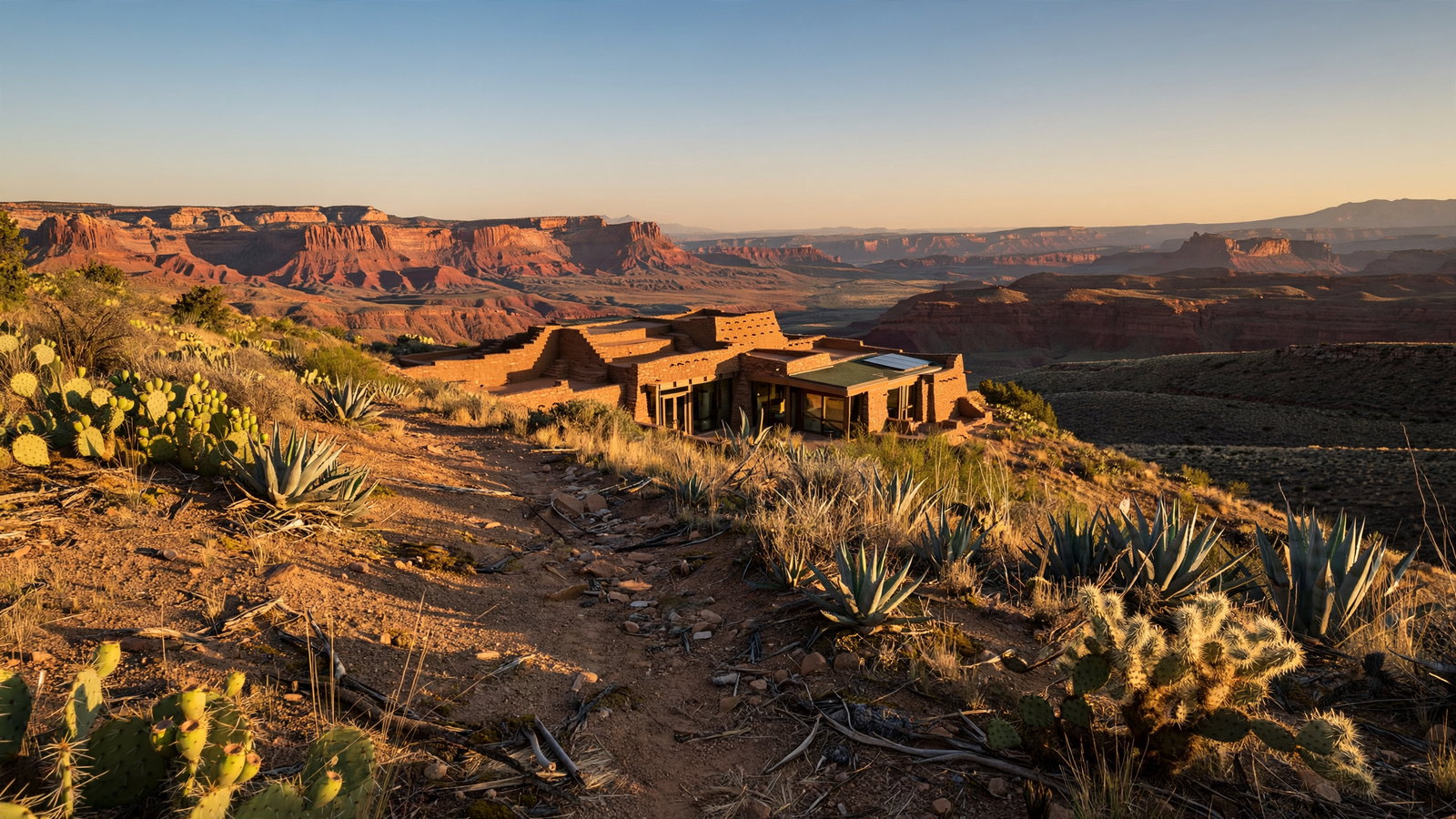
In central Arizona, the Verde Valley can look like a place built from contrasts. Cottonwood trees follow the river through a dry landscape. Red cliffs rise beyond working roads and ranch country. Modern communities sit within sight of stone walls and terraces built centuries ago.
The Verde Valley Archaeology Center and Museum in Camp Verde offers a way to read those layers together. Its work is not simply about putting old objects behind glass. It is about helping people understand that the valley was once a lived-in world of farms, homes, trade routes, cooking fires, ceremonies, and carefully adapted technologies.
That makes the center a useful stop for anyone exploring Yavapai County. The Verde Valley is often experienced through its most visible landmarks, including Montezuma Castle and Tuzigoot National Monument. A museum visit adds something those sites cannot always provide: a broader explanation of how archaeology works, how artifacts are interpreted, and how many different kinds of evidence can illuminate the past.
A museum shaped by a valley, not a single ruin
The Verde Valley Archaeology Center is located in Camp Verde, near one of the most archaeologically rich parts of Arizona. The surrounding region contains evidence of long-term habitation by Indigenous communities, including the people archaeologists have historically identified as the Sinagua. That name is useful as an archaeological label, but it should not be mistaken for the name of a single unified tribe or a complete description of the people who lived here.
Archaeology in the Verde Valley draws on many forms of evidence. Buildings and masonry show how communities organized space. Pottery can reveal choices about materials, design, and exchange. Stone tools document daily work. Seeds, animal remains, pollen, and soil can help reconstruct foodways and environmental change.
The center brings that evidence into a public setting. Rather than treating the past as a list of dates, its exhibits can help visitors ask more interesting questions: How did people make a living in a landscape with limited rainfall? Why were settlements placed where they were? What can a broken pot or a worn tool reveal about a household? How do archaeologists distinguish what is known from what remains uncertain? For related reading, see Montezuma Castle: How a Verde Valley Cliff Dwelling Keeps Ancient Ingenuity in View.
Those questions matter because ancient places are easy to misunderstand when viewed only as scenic backdrops. A cliff dwelling can appear mysterious if its relationship to farming, water, storage, family life, and surrounding communities is left out. A museum can restore some of that everyday context.
Understanding the Verde Valley as a connected place
The valley’s archaeological sites are not isolated curiosities. They belong to a regional network shaped by the Verde River and its tributaries, upland forests, desert plants, and routes leading toward neighboring regions.
Water was central. The river and nearby springs supported agriculture, wildlife, travel, and settlement, while the valley’s varied elevations offered access to different plants, animals, and raw materials. People learned to work within those environmental possibilities rather than treating the landscape as empty space between larger destinations.
That perspective also helps explain why archaeological sites appear in such different forms. Some communities built substantial masonry structures. Others left behind less obvious traces, such as agricultural features, rock shelters, tool-making areas, or scattered pottery. The surviving record is uneven, and it reflects both ancient choices and modern preservation.
The center’s regional focus encourages visitors to connect individual finds with the larger landscape. A pot is not only an attractive object. It may be evidence of cooking, storage, exchange, or changing design traditions. A stone implement is not merely a display piece. It can point toward the work required to gather food, build homes, shape wood, or process plant fibers.
Why small museums matter to archaeology
Large national museums often present archaeology through famous artifacts and major civilizations. Community museums provide a different kind of value. They can concentrate on one landscape closely enough to show how local evidence fits together.
That close attention is especially important in the Verde Valley, where public lands, private property, roads, farms, and tourist destinations overlap with archaeological resources. A museum can make the region’s heritage visible without requiring every visitor to be an experienced hiker or specialist. For related reading, see Tuzigoot National Monument: How a Verde Valley Hilltop Keeps an Ancient Community in View.
It can also explain the limits of what archaeology can claim. Objects do not speak for themselves. Their meaning depends on location, context, comparison, and careful documentation. When artifacts are removed from their original settings, much of that information can be lost. Responsible interpretation therefore involves more than collecting attractive pieces; it involves protecting sites and respecting the cultural significance of Indigenous heritage.
For visitors, this is one of the center’s most useful lessons. Archaeology is not treasure hunting. It is a method for learning from material evidence while recognizing that archaeological places are part of living cultural landscapes.
A companion to the national monuments
Camp Verde is best known to many travelers as the gateway to Montezuma Castle and Montezuma Well, both protected by the National Park Service. Nearby Tuzigoot National Monument preserves a hilltop pueblo overlooking the Verde Valley. These places are essential parts of the region’s public history, but they each present only one portion of a much larger story.
The Verde Valley Archaeology Center works well as a companion visit because it can help travelers approach those monuments with better questions. What kinds of communities used the surrounding valley? How did people adapt to changing water conditions? What is the difference between a site preserved in place and an object interpreted in a museum? Which parts of the story come from archaeology, and which are informed by descendant communities and continuing Indigenous knowledge?
Visitors who see the museum before heading to a monument may notice details they would otherwise pass by: the placement of a settlement, the importance of storage rooms, the relationship between architecture and terrain, or the evidence of trade between regions. For related reading, see Camp Verde’s Archaeology Center: The Yavapai County Place Where the Verde Valley’s Past Stays Local.
Keeping the past useful in the present
An archaeological museum does not need to make the past feel remote. In the Verde Valley, ancient decisions remain connected to questions modern residents and visitors still recognize. Where is water available? How can people live in a hot, dry environment? What materials last? How should communities care for places that cannot be replaced?
The answers are not simple comparisons between ancient and modern life. Contemporary Camp Verde is not a reconstruction of an ancient settlement, and archaeology cannot provide a complete blueprint for living today. But the record does show that people have long responded creatively to the valley’s conditions.
That is the enduring appeal of the Verde Valley Archaeology Center. It gives a relatively small community a place to tell a large regional story—one that includes architecture, food, technology, landscape, preservation, and cultural continuity. It also gives travelers a way to slow down before or after visiting the better-known ruins.
In a county filled with dramatic scenery, the center offers a quieter kind of discovery. It asks visitors to look past the stone walls and see the human systems that made those walls meaningful. The result is a richer understanding of Camp Verde and of the Verde Valley itself: not an empty desert interrupted by ruins, but a deeply inhabited landscape whose older stories are still being studied, protected, and brought into view.
Planning a visit
The Verde Valley Archaeology Center and Museum is in Camp Verde, making it a practical addition to a trip that includes Montezuma Castle, Montezuma Well, Tuzigoot, or other Verde Valley destinations. Hours, admission information, exhibits, and educational programming can change, so visitors should check the center’s official website before traveling.
Allowing time for both the museum and nearby archaeological sites creates a more complete experience. The monuments show the physical remains in their original setting; the museum helps explain the wider network of evidence and the care required to interpret it.
Use: Official information about the museum, its mission, collections, exhibits, and visitor planning.
Use: Authoritative context on Montezuma Castle, Montezuma Well, and the archaeology of the Verde Valley.
Use: Context on the regional archaeological landscape and the hilltop pueblo preserved near Clarkdale.
Use: Background on archaeological interpretation, collections, and the study of Arizona’s Indigenous past.