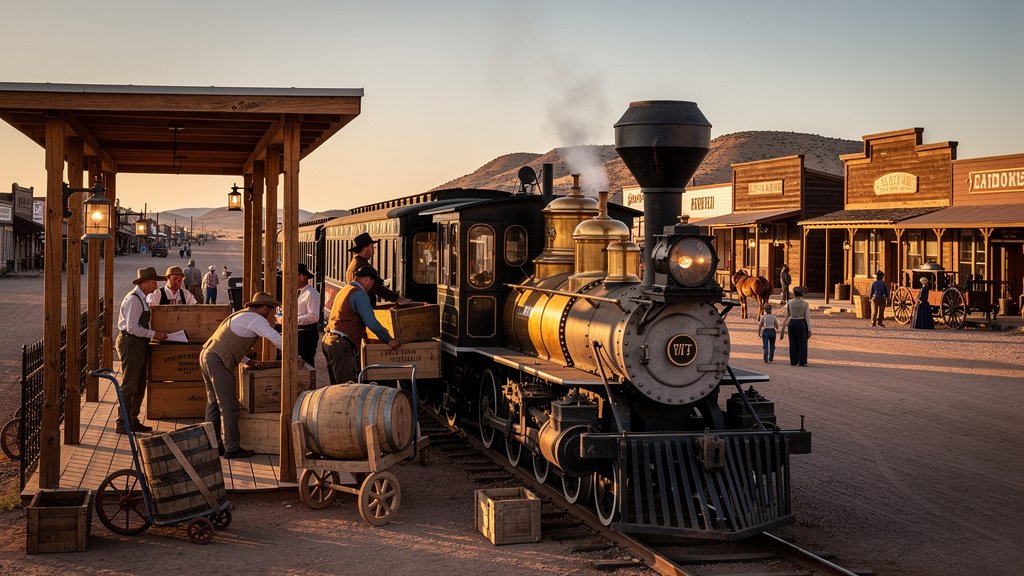
Prescott Was Waiting for the Railroad
For much of Prescott’s early history, getting people and goods in and out of town meant relying on rough roads and long overland trips. That changed in the late 19th century when railroad service finally reached Prescott.
The First Railroad Arrives
The Arizona Central Railway opened to Prescott on December 31, 1886, connecting the community with the Atlantic and Pacific railroad system. The arrival changed transportation and helped Prescott strengthen its position as a commercial center.
The Peavine
By the 1890s, the Santa Fe, Prescott and Phoenix Railway had extended Prescott’s connections even farther. The line became known locally as the Peavine, a name that remained familiar long after the trains disappeared.
Business Became Easier
Rail transportation made it easier to bring merchandise, mining supplies and other goods into Prescott. It also provided a faster way to ship products and connect local businesses with markets beyond the region.
A Railroad Becomes a Trail
The railroad eventually disappeared, but part of its legacy remains. Today, portions of the former rail corridor are associated with the Peavine Trail near Watson Lake and the Granite Dells. A route that once carried trains now provides a way for people to experience the landscape on foot and by bicycle.
Why the Peavine Still Matters
The railroad story is really a story about Prescott becoming connected to the larger world. Mining helped establish the town, but transportation helped determine whether the community could continue to grow. The railroad brought Prescott closer to the modern economy and left behind a corridor that is still part of local life today.