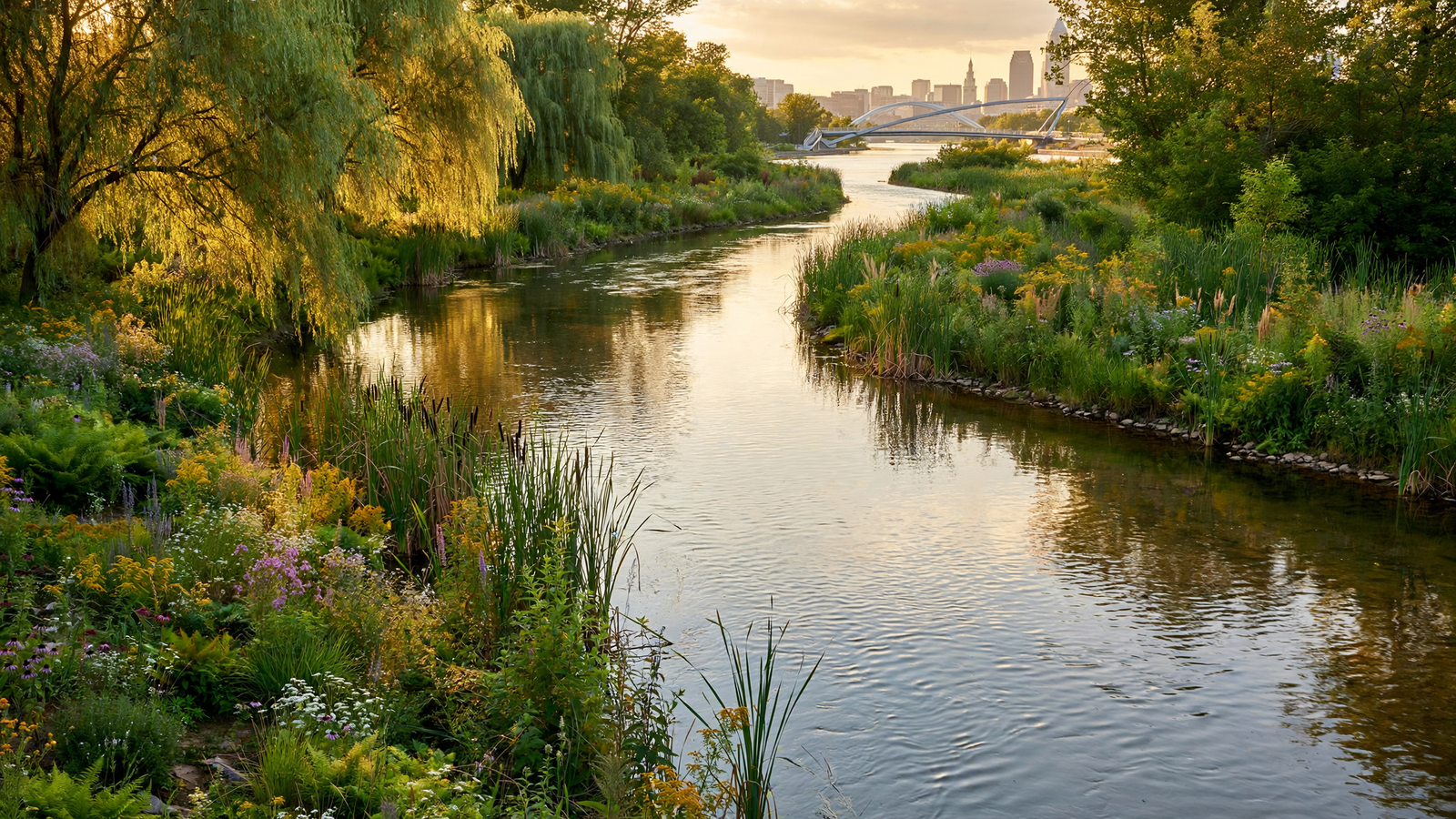
In Northeast Ohio, the Cuyahoga River is becoming a powerful example of environmental repair. After decades of industrial pollution, sewage problems and damaged habitat, the river has made enough progress for the U.S. Environmental Protection Agency to remove it from the list of Great Lakes Areas of Concern.
The decision, announced in 2024, does not mean the Cuyahoga is untouched or that restoration work has ended. It means that the river no longer meets the federal criteria for an impaired watershed under the Great Lakes cleanup program. A place once used as a symbol of environmental decline is now being recognized for measurable recovery.
A river shaped by industry
The Cuyahoga flows for roughly 100 miles through northeastern Ohio before reaching Lake Erie at Cleveland. For much of the 19th and 20th centuries, factories, refineries, mills and growing communities crowded its banks. Industrial waste and untreated sewage degraded water quality, while hardened shorelines and altered channels reduced habitat for wildlife.
A fire on the river in 1969 drew national attention, but it was part of a longer history of pollution rather than the beginning of the problem. The public response helped build support for stronger water-quality laws, including the Clean Water Act, and for the Great Lakes Water Quality Agreement’s program to restore the region’s most damaged waterways.
The Cuyahoga was designated an Area of Concern in 1987. That designation brought a framework for identifying specific problems, setting restoration goals and tracking progress over time.
Progress built project by project
The river’s recovery has not come from one dramatic fix. It has grown out of many practical improvements: modern wastewater treatment, controls on industrial pollution, cleanup of contaminated sediment, restoration of wetlands and riverbanks, and efforts to reduce sewage overflows during heavy rain.
Local governments, state agencies, federal programs, businesses, nonprofit organizations and community groups have all played roles. Their work has improved conditions both in the river and in tributary streams that feed it. Restored shorelines can provide shelter for aquatic life, while wetlands help slow stormwater and filter pollutants before they reach the main channel.
Monitoring by Ohio environmental officials has also documented healthier biological conditions in parts of the watershed. Fish and other aquatic communities are now able to use sections of the river that were once severely degraded. The improvements matter beyond wildlife: cleaner water supports recreation, public access and a stronger connection between Cleveland and its waterfront.
Delisting is a milestone, not a finish line
Federal delisting is best understood as a report card on long-term progress. It recognizes that the major impairments identified under the Great Lakes program have been addressed well enough for the Cuyahoga to leave the formal list. Continued monitoring and maintenance remain essential, especially as heavier rainfall, aging infrastructure and new development create fresh pressures.
That unfinished work does not diminish the achievement. The Cuyahoga’s story shows that environmental damage is not always permanent. When communities measure problems, invest in infrastructure and stay committed across generations, a working river can become a living river again.
The lesson is encouraging because it is practical. Restoration did not depend on a single invention or a perfect moment. It depended on thousands of decisions that made pollution less likely and recovery more possible. The Cuyahoga now carries that evidence downstream toward Lake Erie: progress can accumulate, and a damaged place can earn a healthier future.