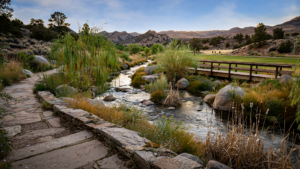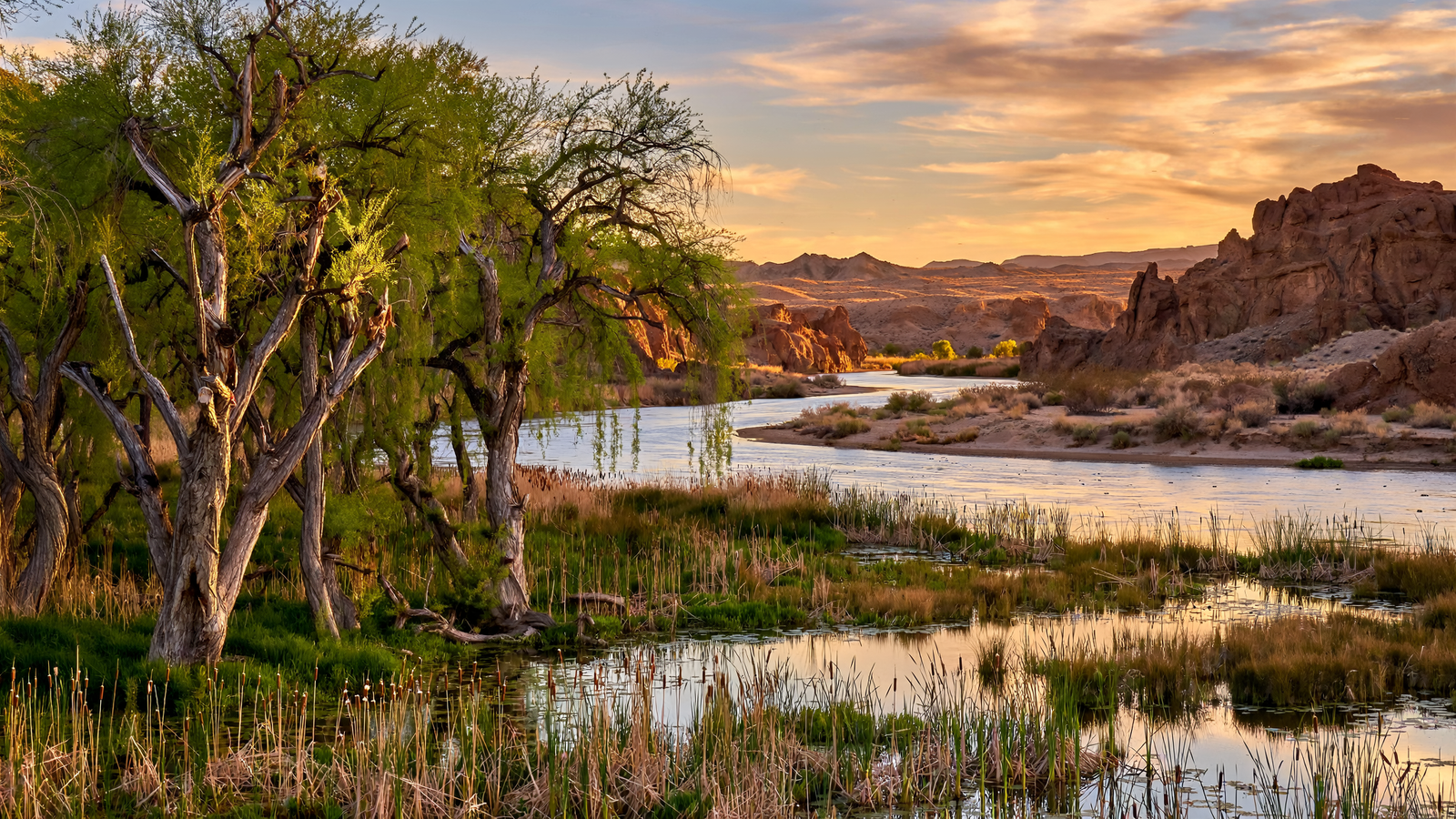
In western Arizona, the Colorado River does something that can seem almost improbable. It moves through a landscape of dry mountains, pale sand, and wide-open desert, yet along its banks are places of shade, standing water, reeds, and tall trees.
Havasu National Wildlife Refuge is one of those places. Stretching along roughly 30 river miles between Lake Havasu and Davis Dam, the refuge protects a connected series of river habitats in one of the driest parts of the Southwest. The boundary crosses the Arizona-California line, but its Arizona side offers a particularly clear view of how a river can create an entirely different world inside the desert.
The refuge is not a single scenic overlook or a compact preserve. It is a long, working landscape shaped by water, seasonal movement, and the continuing effort to keep native habitat available for wildlife. Its importance is easiest to understand by following the river itself.
A river corridor in an arid region
The lower Colorado River is a narrow green thread compared with the surrounding Mojave and Sonoran deserts. That contrast is central to Havasu’s character. Along the river are backwaters, marshes, riparian forests, islands, beaches, and rocky shorelines. Away from the water, the refuge opens into desert uplands marked by rugged hills and sparse vegetation.
For people traveling through western Arizona, the change can happen quickly. A road or boat route may pass through dry country, then arrive at a river bend where cottonwoods and willows gather around the water. In these pockets, the river provides food, cover, nesting space, and resting habitat that cannot be found across the surrounding desert.
The U.S. Fish and Wildlife Service established Havasu National Wildlife Refuge in 1941 to protect migratory birds and their habitat. That original purpose remains visible today. The refuge lies along the Pacific Flyway, one of North America’s major routes for birds moving between breeding and wintering grounds.
Migration does not always produce a dramatic spectacle. Often, its evidence is quieter: a bird stopping in a sheltered backwater, a flock moving through cottonwoods, or a wetland providing food during a long journey. The refuge’s value comes partly from making those small pauses possible.
Where desert and wetland meet
Havasu’s riparian habitats are especially important because they are limited. In the Southwest, riverside forests occupy only a small fraction of the landscape, but they support a disproportionately large share of regional wildlife. Cottonwood-willow stands can offer nesting sites and shade, while marshes and shallow waters provide feeding areas for waterfowl and other wetland species.
The refuge is home to or visited by a wide range of birds, including ducks, geese, herons, egrets, grebes, raptors, and songbirds. The exact mix changes with season and water conditions. Some species remain in the area year-round; others pass through during migration or use the river corridor during winter.
Birds are not the only residents. The refuge’s river and desert habitats also support mammals, reptiles, amphibians, fish, and countless insects. Beavers, for example, can influence the shape of small waterways by building dams and creating pools. Desert bighorn sheep use rocky terrain, while species such as desert tortoises depend on the wider desert environment beyond the immediate shoreline.
That variety is possible because the refuge protects a mosaic rather than one uniform habitat. Water’s edge, forest, marsh, island, cliff, and desert each contribute something different. Together, they form a corridor where wildlife can feed, shelter, reproduce, and move.
The river is both habitat and route
Havasu National Wildlife Refuge is also a place where the meaning of a river extends beyond its banks. The Colorado is a transportation route for people, a source of recreation, and a managed waterway serving communities and farms across the Southwest. The refuge exists within that heavily used system, not apart from it.
This makes the landscape especially instructive. Conservation here is not about returning the entire river to an untouched condition. The lower Colorado has been reshaped by dams, reservoirs, water diversions, roads, development, and recreation. Instead, the refuge protects the remaining and restored pieces of river habitat that still perform essential ecological work.
Those pieces can be surprisingly small. A stand of mature trees may provide a nesting colony. A quiet cove may shelter fish and waterfowl. A marsh may offer food during migration. A narrow strip of vegetation can connect larger habitat areas and help wildlife move through a fragmented landscape.
Seen from the water, these places may appear modest. Seen as part of a flyway and a river system, they become much more significant.
Exploring the refuge
Visitors generally experience Havasu National Wildlife Refuge through a combination of shoreline access, trails, roads, overlooks, and boating routes. Some parts of the refuge are easiest to reach by water, while others can be explored from land. Conditions vary, and the refuge encourages visitors to check current information before setting out.
The Bill Williams River National Wildlife Refuge lies near the southern end of Lake Havasu, but it is a separate protected area with its own habitats and management. Together, the two refuges help make the lower Colorado River region a destination for birding, wildlife observation, fishing, paddling, hiking, and quiet time outdoors.
Havasu is not necessarily a place that reveals everything at once. A visitor may notice the mountains first, then the bright surface of the river, and only later the movement in the vegetation: a heron lifting from the shallows, a bird calling from a cottonwood, or fish breaking the surface in a sheltered channel.
That slower kind of attention suits the refuge. Its story is not built around one monumental object. It is written in transitions: desert into forest, open water into marsh, shoreline into upland, winter visitor into spring traveler.
Why protected river places matter
Rivers in the desert carry an importance that is easy to underestimate because their green margins can look ordinary once they become familiar. But the Colorado River’s riparian corridors are among the region’s most productive and heavily used wildlife habitats. They also provide places where people can encounter a living system rather than simply view a dry landscape from a distance.
Protection does not eliminate the pressures facing the river. Water scarcity, invasive plants, altered flows, wildfire, recreation, and habitat loss all affect the lower Colorado. Refuge managers and partners must work within those realities, monitoring wildlife, maintaining habitat, managing public use, and protecting sensitive areas.
The result is not a preserved snapshot of an earlier river. It is an ongoing effort to keep ecological possibilities open in a landscape where water is limited and demand is high.
That may be Havasu National Wildlife Refuge’s most meaningful lesson. A desert does not need to be made less desert-like to support abundant life. It needs its rivers, wetlands, forests, and seasonal connections to remain intact enough for life to use them.
Along the Arizona reaches of the Colorado, Havasu gives that principle a physical form. The refuge is a place where a river keeps making room—for migrating birds, desert wildlife, working landscapes, and people willing to follow a greener line through the sand.