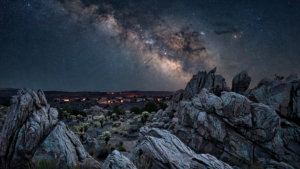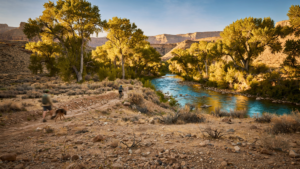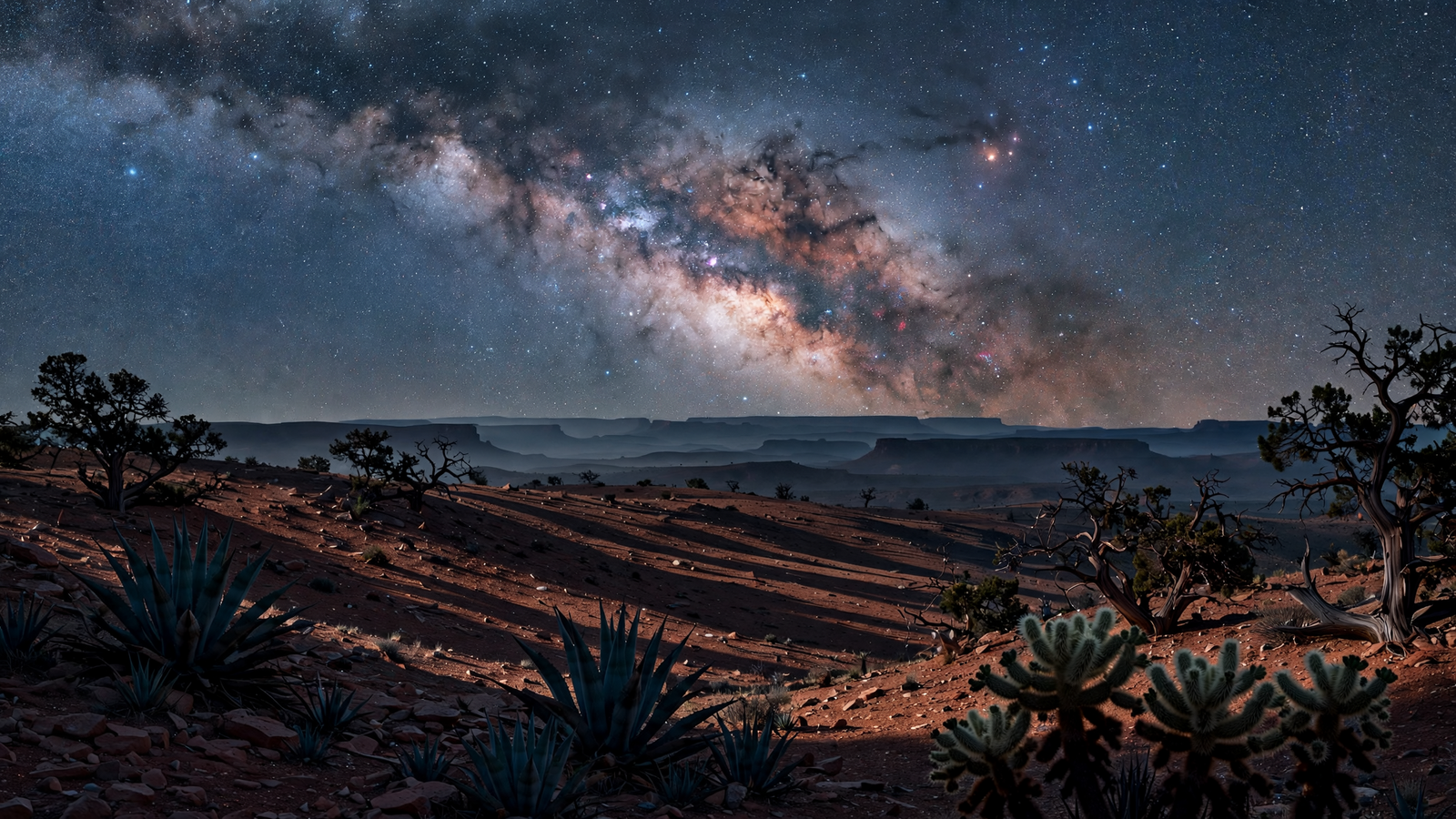
After sunset, Camp Verde reveals a version of the Verde Valley that daylight can easily conceal. The town’s streets, homes and businesses occupy a broad desert basin, but beyond the developed areas the landscape opens quickly into dark hills, riparian corridors and high-country horizons. On a clear night, the sky can feel less like scenery than a second landscape. For related reading, see Camp Verde’s Archaeology Center: The Yavapai County Place Where the Verde Valley’s Past Stays Local.
That night landscape is now receiving more deliberate protection. Camp Verde has pursued recognition as an International Dark Sky Community, placing the quality of its nighttime environment within the town’s broader conversation about growth, conservation and tourism. The effort is not about turning off every light. It is about using light more thoughtfully—directing it where it is needed, limiting unnecessary brightness and keeping the sky visible above a community that is changing. For related reading, see Montezuma Castle: How a Verde Valley Cliff Dwelling Keeps Ancient Ingenuity in View.
A town looking up
Camp Verde sits in central Arizona’s Verde Valley, between the red-rock country around Sedona and the forested uplands of the Mogollon Rim. The town is best known for its access to places such as Montezuma Castle National Monument, Fort Verde State Historic Park and the Verde River corridor. Those attractions draw visitors during the day, but the area’s geography offers another kind of invitation after dark. For related reading, see Dead Horse Ranch State Park: How a Cottonwood Ranch Became a Verde Valley Refuge.
Compared with larger metropolitan areas, Camp Verde has an important advantage: much of the surrounding landscape remains relatively open. The town is not isolated from development, highways or commercial lighting, but it is still close to broad stretches of less-developed country. That makes decisions made within the community visible far beyond individual properties. A fixture that spills light upward or outward does not simply brighten one parking lot; it can contribute to a larger glow across the valley.
The dark-sky initiative recognizes that darkness is a shared resource. The stars above a home, trail, campground or public road do not belong to one parcel. They are part of the visual character of the entire valley.
What dark-sky protection actually means
Dark-sky planning is sometimes misunderstood as a campaign against nighttime safety or economic activity. In practice, the goal is usually more precise: preserve useful illumination while reducing glare, wasted light and illumination that escapes into the sky.
Common dark-sky principles include shielding outdoor fixtures so light shines downward, using the lowest practical brightness, choosing warmer color temperatures and turning lights off or reducing them when they are no longer needed. Good design can make a sidewalk, entrance or roadway easier to navigate without flooding nearby homes, habitat or the night sky with excess light.
That distinction matters in a growing community. Camp Verde needs lighting for roads, businesses, public facilities and homes. A dark-sky program does not erase those needs. Instead, it asks whether each light is doing a useful job and whether it is doing that job efficiently.
International Dark Sky Community recognition is administered by DarkSky International, which evaluates communities that adopt and maintain measures to protect nighttime darkness. The program typically involves local commitment, public education, lighting standards and a plan for continued improvement. Recognition therefore represents more than an attractive label. It is a framework that can help a town make lighting part of ordinary planning decisions.
The wildlife dimension
For people, artificial light at night can be a nuisance or a source of lost beauty. For wildlife, it can alter behavior in ways that are less visible but more consequential.
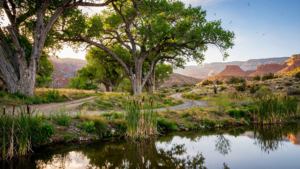
The Verde Valley is shaped by water in an otherwise dry region. The Verde River and its tributaries support cottonwoods, willows and other vegetation that create habitat for birds, mammals, reptiles and insects. Many of those species evolved around a predictable cycle of daylight and darkness. Artificial light can interfere with movement, feeding, migration and reproduction, especially for animals that navigate or hunt at night.
Insects are drawn toward artificial lights, where they may spend energy circling fixtures rather than feeding or reproducing. Bats can change their flight patterns around bright areas. Migrating birds may be disoriented by skyglow, particularly when low clouds or haze amplify the effect. Not every outdoor light has the same impact, and dark-sky practices are not a substitute for habitat protection, but reducing unnecessary illumination can remove one avoidable pressure from an already stressed environment.
For Camp Verde, the issue is especially relevant because the town’s identity is tied to the relationship between developed places and the surrounding river, desert and upland ecosystems. Protecting darkness extends that relationship into hours when most residents and visitors are indoors.
A benefit for residents before it is a tourism product
Dark skies are often promoted as an attraction, and they can be one. Visitors increasingly seek places where they can see the Milky Way, photograph stars or simply experience a night that is not washed in metropolitan glow. Camp Verde’s location gives it a natural role in the Verde Valley’s outdoor and cultural tourism economy.
But the strongest case for the program begins with residents. Better-designed lighting can reduce glare for drivers and pedestrians. Shielded fixtures can keep light from shining into bedrooms or neighboring yards. Lower energy use can reduce operating costs for households, businesses and public agencies. More consistent lighting standards can also make new development feel less visually intrusive.
The night sky is a public amenity, but it is also part of daily life. A child looking at the stars from a backyard, a family sitting outside on a summer evening and a resident driving home beneath a visible constellation are all experiencing the same community asset. Protecting that experience does not require a wilderness boundary. It requires many small choices repeated across a town.
Why the timing matters
Camp Verde’s dark-sky work arrives as communities across Arizona face a familiar tension: how to welcome new homes, businesses and visitors without losing the qualities that made a place attractive in the first place.
Growth is often discussed through roads, water systems, housing and commercial space. Lighting can seem secondary, yet it is one of the most immediate ways development changes a landscape. A new building may occupy a limited footprint, while its illumination can spread well beyond its walls. Addressing lighting early gives planners and property owners a practical way to reduce that reach.
The effort also creates a common language for conversations that otherwise happen one project at a time. Rather than treating glare, skyglow or intrusive fixtures as isolated complaints, a town can establish shared expectations. That can help residents understand why certain fixture designs are preferred and help developers anticipate requirements before construction begins.
Recognition alone will not preserve the Verde Valley’s darkness. The result will depend on enforcement, maintenance, public participation and future decisions about roads and commercial growth. Outdoor fixtures can be replaced, aimed incorrectly or left on all night. A successful program therefore has to remain practical enough for people to follow and visible enough for the community to care about.
The value of a visible night
Camp Verde’s dark-sky initiative is a modest form of infrastructure, but it changes how the town understands its surroundings. The community is not only a place from which to reach monuments, trails and river corridors. It is also part of a living valley whose environmental character continues after sunset.
That perspective gives darkness a place in local stewardship. The stars are not an isolated spectacle reserved for remote parks. They are part of the setting in which Camp Verde has developed, and they remain available because the surrounding landscape has not yet been overwhelmed by artificial glow.
The most encouraging aspect of the effort is its practicality. Protecting the night does not demand that a community stop living after dark. It asks the community to live more carefully: light the ground instead of the sky, use what is needed instead of what is merely available, and treat darkness as something worth carrying forward.
In a valley known for ancient ruins, river habitat and desert horizons, that is a fitting kind of preservation. Camp Verde is making room for the night to remain part of the place.
Use: Municipal context, community planning and official information about Camp Verde.
Use: Dark-sky community standards, recognition framework and principles for responsible outdoor lighting.
Use: Background on artificial light at night, skyglow and the effects of light pollution.
Use: Regional wildlife context for Arizona species and habitats affected by changes to the nighttime environment.
Town of Camp Verde — https://www.campverde.az.gov/ — Municipal context, community planning and official information about Camp Verde.
DarkSky International — International Dark Sky Places — https://darksky.org/what-we-do/international-dark-sky-places/ — Dark-sky community standards, recognition framework and principles for responsible outdoor lighting.
National Park Service — Light Pollution — https://www.nps.gov/articles/000/light-pollution.htm — Background on artificial light at night, skyglow and the effects of light pollution.
Arizona Game and Fish Department — https://www.azgfd.com/wildlife/ — Regional wildlife context for Arizona species and habitats affected by changes to the nighttime environment.