Kindness is often imagined as a dramatic gesture: a donation large enough to make the news, a rescue that draws a crowd, a stranger stepping forward at exactly the right moment.
But for many older adults, the most meaningful help is quieter. It may be a ride to a medical appointment, a grocery trip, a small repair around the house or a reassuring phone call during an otherwise empty afternoon.
In Scottsdale, Arizona, an organization called Neighbors Who Care has built its work around those ordinary needs. Its volunteers help older adults remain connected to their communities and continue living as independently as possible. The model is simple: people who need assistance request it through the organization, and volunteers provide practical support within the group’s service area.
When ordinary tasks become barriers
Aging does not automatically mean losing independence. But a broken light fixture, a missed ride or an hour-long errand can become a serious obstacle when driving is no longer possible, mobility is limited or family members live far away.
The Arizona Department of Economic Security’s aging-services system identifies transportation, social connection, caregiver support and assistance with daily life as important parts of helping older adults remain in their homes and communities. These needs are easy to overlook because they are not always medical. Yet they can determine whether someone gets to an appointment, has food in the kitchen or feels able to continue managing at home.
That is the space Neighbors Who Care tries to fill. Rather than treating every request as a crisis, the organization focuses on the small points of friction that can make daily life harder.
A neighborly answer to a practical problem
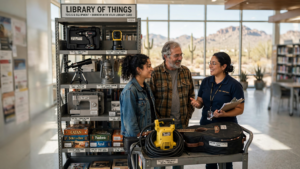
Neighbors Who Care describes its services as volunteer-based and free to the older adults it serves. Its assistance includes transportation, shopping and errands, friendly visiting, telephone reassurance, respite for caregivers and limited help with tasks around the home. The exact availability of a service depends on the organization’s guidelines, volunteer capacity and the location of the request. For related reading, see The Library Shelf That Lends More Than Books: How Arizona Neighbors Share the Tools of Everyday Life.
That last point matters. A volunteer network is not a replacement for emergency services, medical care or professional home health. Its value is different: it creates a dependable layer of help between formal care and doing everything alone.
For an older adult, the benefit may be immediate and concrete. A ride can make a doctor’s visit possible. A friendly visit can break up a long day. A volunteer who helps with an errand can preserve time and energy for the things the person most wants to do independently.
For caregivers, practical assistance can also create breathing room. Even a short period of respite may help a family member handle work, appointments or other responsibilities without feeling that every need rests on one person.
The power of repeated contact
One-time generosity has its place. But organizations built around recurring volunteer relationships offer something different: continuity.
Social isolation is not simply the same as being physically alone. The National Institute on Aging distinguishes isolation from loneliness while noting that both can affect health and well-being. Older adults may become isolated after losing a spouse, giving up driving, moving away from longtime friends or developing a health condition that makes leaving home more difficult.
A regular ride or phone call cannot solve every cause of isolation. It can, however, make connection part of the week instead of an occasional surprise. The repeated nature of the contact may be as important as the individual task.
This is one reason the organization’s name is instructive. The volunteers are not presented as distant professionals arriving to manage a problem. They are neighbors offering a portion of their time. That framing can make receiving assistance feel less like entering a system and more like participating in a community.
Kindness with boundaries
Effective volunteerism is not just about good intentions. It also requires structure.
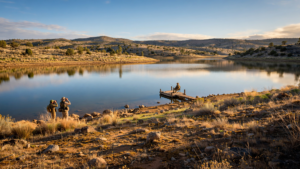
Neighbors Who Care coordinates requests rather than asking older adults to arrange informal help with unknown individuals. People who volunteer must work within the organization’s policies and the limits of the service being requested. Transportation, home visits and caregiver support all require clear expectations about safety, scheduling and responsibility. For related reading, see Goldwater Lake: How Prescott Turned a Reservoir Into an Everyday Mountain Place.
Those boundaries protect everyone involved. They help volunteers understand what they can and cannot do, and they give older adults a clearer way to ask for help. They also make it possible for an organization to match a request with an appropriate volunteer instead of relying on vague promises.
The arrangement reflects a useful principle for community kindness: reliability is part of compassion. A person who needs a ride does not only need someone who cares. They need to know whether the ride is confirmed, when it will arrive and what to do if plans change.
Volunteering without a dramatic skill set
The model also broadens the idea of who can be helpful. Not every volunteer is a health professional, counselor or home-repair expert. Many forms of assistance depend more on patience, punctuality and a willingness to listen.
Someone may be able to drive but not repair a cabinet. Another person may prefer making reassurance calls. Someone else may have time for occasional errands or friendly visits. Matching people with tasks that fit their schedules and abilities can make volunteering more sustainable.
That flexibility is important because volunteer programs often depend on people who can give modest amounts of time consistently. A person who cannot commit to a major weekly role may still be able to help with one ride, one phone call or one afternoon each month.
What older adults and families can learn from the model
Neighbors Who Care offers a useful reminder for anyone looking for community support: ask early, before a small difficulty becomes a crisis.
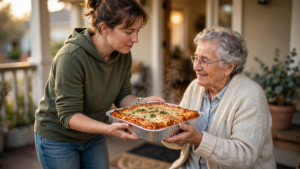
Families may wait until a parent has missed several appointments or stopped leaving home before seeking assistance. Older adults may hesitate because they do not want to burden anyone. A volunteer service cannot meet every need, and availability can change, but contacting a local aging organization early can reveal options that are not obvious from the outside. For related reading, see The Neighbor-Made Meal: How Lasagna Love Turns a Homemade Dinner Into a Wider Circle of Care.
People considering help should ask practical questions: What geographic area is covered? Which services are available? Is there a cost? How far ahead should a request be made? What happens if a volunteer is unavailable? Is the service appropriate for a medical, mobility or emergency situation?
These questions are not signs of distrust. They are part of making a good match.
A lesson for other communities
The Scottsdale example points to a broader truth about civic life. Communities do not become caring only through large institutions or major campaigns. They become caring when people notice the everyday tasks that isolate their neighbors and create practical ways to share them.
That can take many forms: a volunteer driver program, a telephone reassurance circle, a neighborhood fix-it team or a partnership between an aging agency and local residents. The details will vary from place to place. The underlying idea is portable.
It begins with a question that is easy to ask and difficult to dismiss: What is preventing this person from doing something ordinary?
Sometimes the answer is a missing ride. Sometimes it is a lonely afternoon. Sometimes it is a lightbulb, a grocery bag or a caregiver who needs an hour to breathe.
Neighbors Who Care has made those small barriers its field of action. In doing so, it shows that kindness does not have to be spectacular to be transformative. It can be scheduled, coordinated and repeated—and still feel deeply human.
Use: Primary source for the organization’s mission, service area, volunteer model and types of assistance offered.
Use: State-level context on aging services, community support and assistance for older Arizonans.
Use: Authoritative context on the difference between loneliness and social isolation and their importance to older adults.
Neighbors Who Care — https://neighborswhocare.com/ — Primary source for the organization’s mission, service area, volunteer model and types of assistance offered.
Arizona Department of Economic Security — Aging and Adult Services — https://des.az.gov/services/older-adults/area-agency-aging — State-level context on aging services, community support and assistance for older Arizonans.
National Institute on Aging — Loneliness and Social Isolation: Tips for Staying Connected — https://www.nia.nih.gov/health/loneliness-and-social-isolation/loneliness-and-social-isolation-tips-staying-connected — Authoritative context on the difference between loneliness and social isolation and their importance to older adults.