Prescott is often introduced through its most recognizable places: a courthouse square framed by Victorian buildings, granite formations rising above the pines, and mountain lakes that invite a day outdoors. But the city’s character is also held in quieter places—landscapes that do not demand attention so much as reward it.
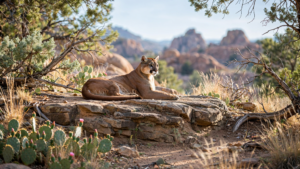
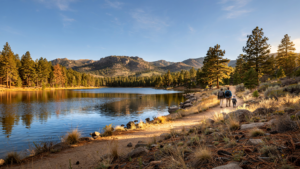
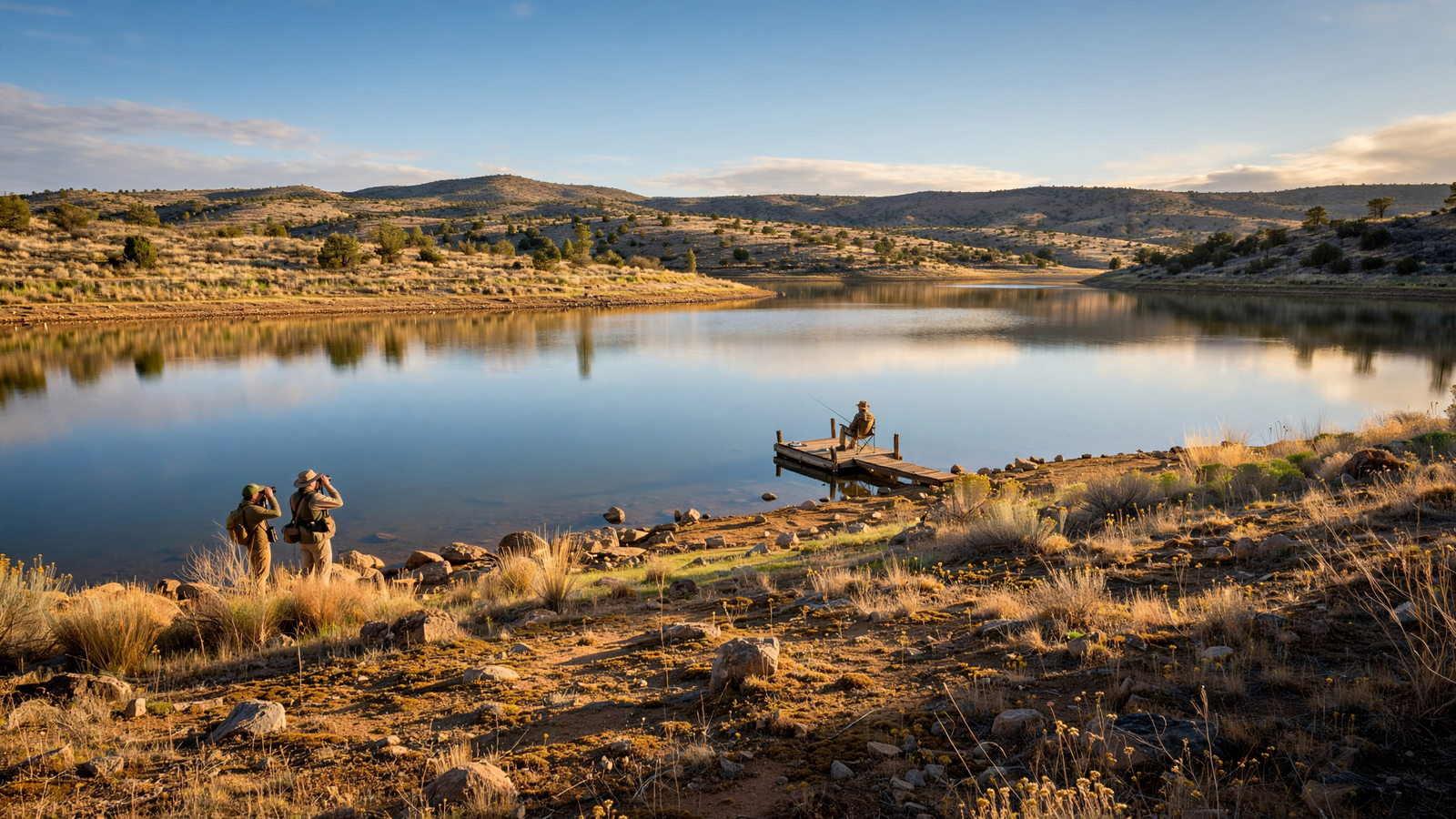
Willow Creek Reservoir is one of those places. North of central Prescott, the reservoir and the open land around it form a low-key meeting point between the city and the high desert. People come to fish, walk, watch birds, picnic, and spend time near the water. Wildlife uses the same landscape for feeding, resting, and moving through the region.
Its importance is not that it resembles a remote wilderness. It does not. The reservoir is useful precisely because it is accessible and ordinary. It shows how a working water body can become part of a community’s public landscape without losing its practical purpose.
A reservoir with more than one job
Willow Creek Reservoir is part of Prescott’s broader municipal water system and open-space story. Reservoirs are often understood mainly as infrastructure: places that store water and help communities manage a changing supply. Yet once a reservoir occupies a landscape for decades, other uses begin to gather around it.
At Willow Creek, water storage exists alongside recreation and habitat. The shoreline creates a different environment from the surrounding dry grassland and ponderosa-pine country. Shallow edges, brush, mud, and patches of vegetation give birds and other animals places to forage and shelter. The water also makes the area appealing to people seeking a short outing rather than a demanding backcountry trip.
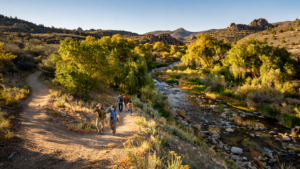
That combination matters in Prescott, where public access to nature is part of everyday life. A family does not need to plan a long expedition to experience the change from pavement to open ground. An angler can spend a few hours at the shoreline. A walker can follow the surrounding paths. A visitor with binoculars may find that a small body of water concentrates more life than the dry hills around it. For related reading, see Lynx Lake: How a Prescott Mountain Reservoir Became an Everyday Escape.
Where the high desert gathers around water
Prescott sits in a landscape shaped by elevation, seasonal rain, rocky hills, and forests that change with slope and aspect. Water is never just scenery here. It determines where plants grow more densely, where insects gather, and where animals can find food or cover.
That is why reservoirs and creeks can feel disproportionately alive in an arid region. A wet margin creates a narrow band of habitat. Even when the surrounding terrain looks muted, the water’s edge may hold reeds, grasses, willows, insects, and the birds that depend on them.
Willow Creek Reservoir is especially valuable as a place where several habitat types touch. The reservoir itself is only one part of the picture. Its shoreline transitions into open ground, drainage areas, and upland vegetation. Those edges are often where wildlife activity becomes easiest to see. Waterfowl may rest on the surface, shorebirds may work along the margins, and raptors may use nearby trees or elevated ground as hunting perches.
Not every visit produces a dramatic sighting. That is part of the appeal. The reservoir invites attention to gradual changes: the arrival of migratory birds, the movement of fish near the bank, the appearance of fresh green after rain, or the way the shoreline changes through a dry season.
A public landscape rather than a private escape
Many beautiful places are protected by distance. Willow Creek’s value comes from the opposite quality. It is close enough to Prescott to function as an everyday destination.
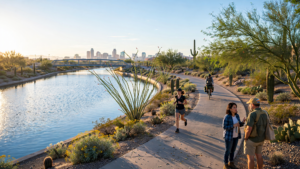
The city’s parks and recreation system treats the area as a place for public use, with opportunities for fishing, non-motorized boating, wildlife observation, walking, and picnicking. Those uses may sound modest, but together they create a broad invitation. A reservoir does not have to be an adventure destination to become meaningful. It can be where someone takes visiting relatives, where a child learns to recognize a heron, or where a resident goes when an hour outdoors is all that time allows. For related reading, see The Tucson Loop: How a Desert Trail Became Part of Everyday Life.
That accessibility also makes the site a useful introduction to Prescott’s natural setting. A first-time visitor can see, in one compact outing, how the city’s recreation spaces connect water, forest, grassland, and open sky. The experience is less about checking off a landmark than understanding the pattern of the place.
The overlooked work of maintaining access
A public reservoir does not remain welcoming by accident. Trails, access points, safety information, fishing rules, boating restrictions, and shoreline conditions all require attention. So does the balance between recreation and habitat.
Water levels can change. Shorelines can become muddy or uneven. Seasonal weather can affect roads and paths. Wildlife needs quiet areas even when visitors are present. Responsible recreation therefore depends on small choices: staying on established routes, keeping dogs under control, carrying out litter, avoiding disturbance to nesting birds, and following current city or Arizona Game and Fish regulations.
Those habits are not merely etiquette. They help preserve the qualities that make the reservoir useful. A place can serve people and wildlife at the same time, but only if visitors recognize that the shoreline is habitat as well as a viewpoint.
The same principle applies to fishing. The Arizona Game and Fish Department manages fishing opportunities across the state and publishes current information about regulations, licenses, and stocking or species conditions where applicable. Checking those rules before a visit is part of participating in the landscape rather than simply consuming it.
Why small water bodies matter in a growing region
Prescott’s outdoor identity is often associated with large, dramatic scenery. Yet the city’s quality of life also depends on smaller places that absorb daily use. Reservoirs, creek corridors, neighborhood parks, and preserved open spaces give residents repeated contact with nature. They are where conservation becomes visible as a routine rather than an abstract idea. For related reading, see Goldwater Lake: How Prescott Keeps a Mountain Reservoir Part of Everyday Life.
Willow Creek Reservoir demonstrates that public value does not always require untouched wilderness. A managed water body can still support wildlife, offer quiet, and provide a sense of distance from town. Its human history and practical function do not cancel its natural character. They help explain it.
This is also why such places deserve careful attention as communities grow. Development can increase pressure on water, roads, shorelines, and open space. A reservoir that is treated only as infrastructure may lose its recreational and ecological benefits. One treated only as a recreation site may be managed without enough regard for water needs or habitat. The long-term challenge is to keep the different roles in view at once.
A place for noticing
The best way to experience Willow Creek Reservoir is not necessarily to arrive with a crowded itinerary. A slower visit makes more sense. Watch the shoreline before walking on. Notice which parts of the water are open and which are edged by vegetation. Listen for birds. Look across the reservoir toward the surrounding hills and consider how much of Prescott’s landscape is organized by the presence—or absence—of water.
In a region where every reliable water source matters, that act of noticing is a form of understanding. The reservoir becomes more than a destination. It becomes a lesson in how a high-desert city makes room for practical needs, public recreation, and living systems in the same landscape.
Willow Creek Reservoir may never be Prescott’s most famous view. Its contribution is quieter and, in some ways, more durable. It gives the city a place where water can be useful, wildlife can gather, and people can return often enough for a landscape to become part of ordinary life.
Use: Municipal parks, recreation, open-space, and visitor-management context for Prescott-area public landscapes.
Use: Reservoir access, recreation opportunities, and site-specific visitor information.
Use: State fishing regulations, licensing guidance, and current information visitors should check before fishing.
Use: General responsible-wildlife-viewing guidance relevant to shoreline recreation and habitat protection.