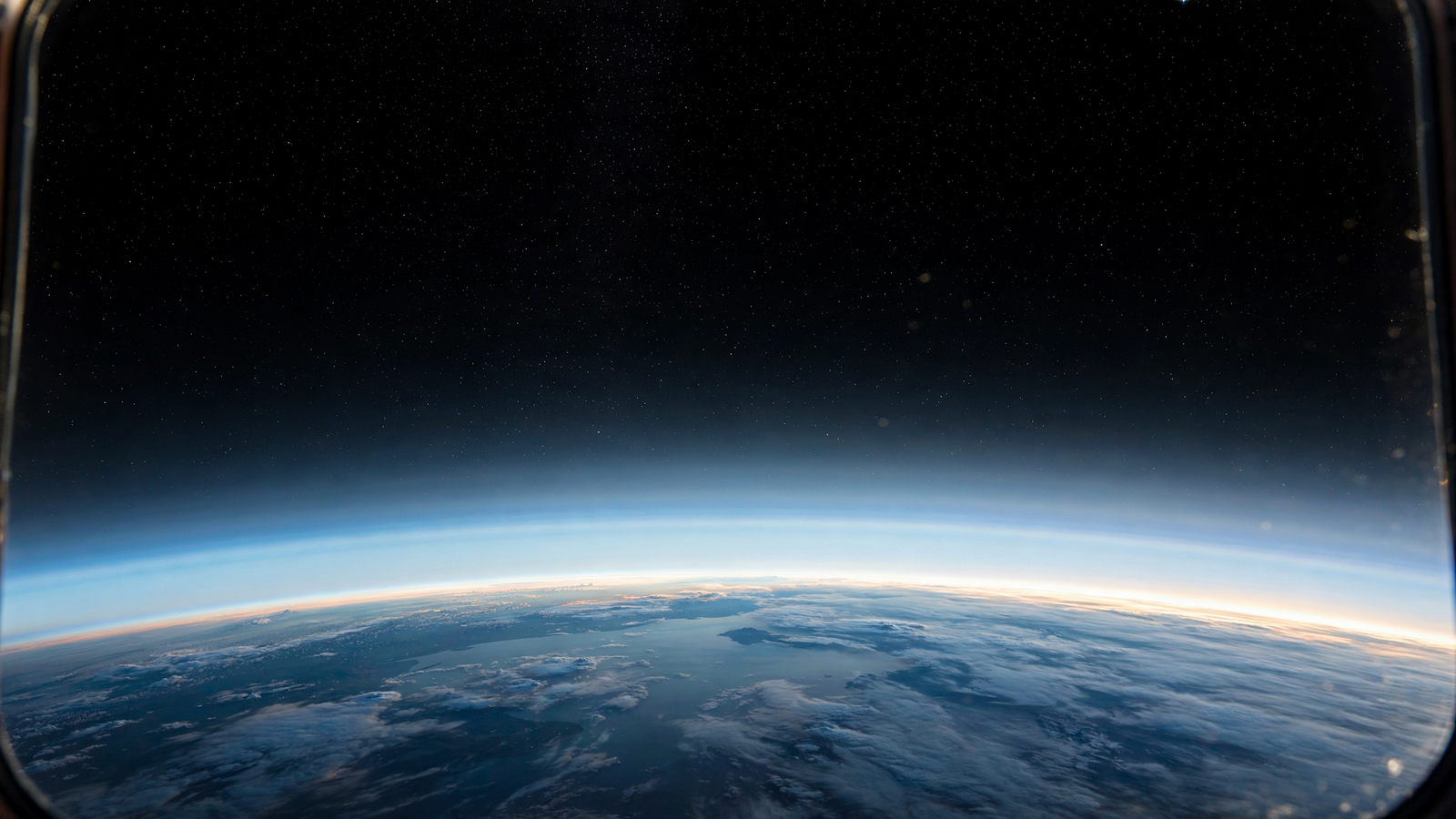
High above Earth, a thin layer of ozone is slowly recovering. The change is easy to miss from the ground. There is no visible border, no single day when the danger ended, and no dramatic announcement that the atmosphere had been repaired. Yet the trend is real: the chemicals that damaged the ozone layer have been phased down, and scientists expect the global ozone layer to return to roughly 1980 conditions during this century if current policies remain in place.
That recovery is more than a scientific success story. It is a useful example of how the world can respond to a problem that crosses every border. The ozone layer belongs to no country, but its protection required governments, scientists, manufacturers, farmers, engineers, and consumers to change how everyday products were made and used.
A shield too thin to see
Ozone is a gas made of three oxygen atoms. Most atmospheric ozone is found in the stratosphere, roughly 15 to 35 kilometers above Earth’s surface. There, it absorbs much of the Sun’s harmful ultraviolet-B radiation before that radiation reaches people, animals, plants, and ecosystems below.
Ozone is not spread evenly around the planet, and the layer is not a solid shell. Its concentration changes with season, altitude, temperature, and atmospheric circulation. Even so, the stratospheric ozone layer acts as a planetary filter. Without it, exposure to ultraviolet radiation would increase the risk of skin cancer and cataracts and could damage crops, marine organisms, and other forms of life.
The crisis became clear in the late 20th century. Researchers found that certain manufactured chemicals could drift into the stratosphere, where sunlight breaks them apart and releases chlorine or bromine. Those elements can participate in chemical reactions that destroy ozone molecules. The most notorious chemicals were chlorofluorocarbons, or CFCs, once widely used in refrigeration, air-conditioning, aerosol sprays, solvents, and the production of plastic foams.
The danger was especially visible over Antarctica. During the Southern Hemisphere’s spring, unusual atmospheric conditions can accelerate ozone loss and create what is commonly called the Antarctic ozone hole. The term does not mean that the atmosphere is completely empty of ozone. It describes a large region where ozone concentrations fall far below normal levels.
From discovery to a global agreement
The scientific warning became a political challenge because CFCs were embedded in international commerce. Refrigerators, air conditioners, fire-suppression systems, and industrial processes all depended on chemicals that had seemed safe and convenient when they were introduced.
Scientists’ findings helped lead to the Vienna Convention for the Protection of the Ozone Layer in 1985. Two years later, countries adopted the Montreal Protocol, an agreement designed to control the production and consumption of ozone-depleting substances. The treaty entered into force in 1989 and was strengthened repeatedly as researchers learned more and alternatives became available.
The agreement worked through schedules rather than a single worldwide switch. Industrialized and developing countries received different timelines, financial assistance helped lower-income nations adopt replacement technologies, and the rules could be adjusted as new evidence emerged. This combination gave governments and businesses a path to change without pretending that every country had the same resources or responsibilities.
The Montreal Protocol is now widely regarded as the first environmental treaty to achieve universal ratification. Its success did not come from one invention or one government. It came from an international framework that made scientific monitoring, technology development, finance, and regulation part of the same effort.
The atmosphere responds slowly
One reason the ozone story can feel confusing is that the atmosphere does not recover as quickly as regulations change. Many ozone-depleting substances remain in the atmosphere for years or decades. Even after production is sharply reduced, older chemicals continue to circulate and release reactive chlorine and bromine high above Earth.
That delay is why the recovery is measured in decades. The United Nations-backed Scientific Assessment of Ozone Depletion: 2022 concluded that the global ozone layer is on track to return to 1980 values by about 2040. The expected dates are later over the Arctic and Antarctic: approximately 2045 in the Arctic and 2066 over Antarctica. These are assessments, not guarantees. They depend on continued compliance, atmospheric behavior, and the avoidance of new sources of ozone-damaging chemicals.
The Antarctic ozone hole will also continue to vary from year to year. Weather patterns in the stratosphere can make it larger or smaller in a particular season. A single unusually large or small ozone hole does not by itself overturn the long-term trend. Scientists look at measurements over many years, combining satellite observations, balloons, ground stations, and atmospheric models.
This long view is important. Environmental recovery is rarely a straight line. A positive trend can contain temporary setbacks, regional differences, and continued risks. The ozone layer is healing, but it is not a reason to stop monitoring it.
A second climate benefit
The ozone agreement also became a climate policy, even though its original purpose was different. Many chemicals used as replacements for CFCs do not harm ozone, but some are powerful greenhouse gases. The 2016 Kigali Amendment to the Montreal Protocol established a global schedule to reduce hydrofluorocarbons, or HFCs.
HFCs were developed for uses including cooling and refrigeration. They do not destroy stratospheric ozone, but they can contribute substantially to warming when released. The United Nations Environment Programme has estimated that full implementation of the Kigali Amendment could avoid up to 0.4 degrees Celsius of warming by the end of the century, while also supporting the ozone layer’s recovery.
That connection illustrates an important lesson in environmental policy: solving one problem can reveal another. Replacing a harmful chemical is not enough if the substitute creates a new risk. Effective rules have to follow the entire system, from manufacturing and servicing equipment to disposal and leakage control.
Why the success matters beyond ozone
The ozone layer’s recovery does not mean that international environmental cooperation is easy. The Montreal Protocol dealt with a specific group of chemicals, and manufacturers were able to develop alternatives. Climate change, biodiversity loss, plastic pollution, and water scarcity involve more sectors and more complicated trade-offs.
Still, the ozone experience offers several practical lessons.
- Science can identify a shared risk. The agreement grew from measurements, laboratory chemistry, atmospheric observations, and models that made an invisible threat understandable.
- Rules can change as knowledge improves. The treaty was strengthened over time instead of being treated as a finished document.
- Fairness helps agreements last. Different national circumstances and financial support were built into the process.
- Industry can become part of the solution. Companies developed new refrigerants, equipment, and production methods in response to the rules.
- Verification matters. Satellites, observatories, and atmospheric measurements provide a way to test whether commitments are producing the expected result.
There is also a lesson in patience. The world did not prevent all ozone damage before it began. It recognized a problem, negotiated a response, adjusted the response, and then waited for the atmosphere to show the result. That process may feel slow, but the evidence of recovery demonstrates that slow can still mean successful.
A repair story still in progress
The ozone layer is not a finished victory. Countries must continue enforcing restrictions, safely managing old equipment, preventing illegal production and trade, and developing cooling technologies that are both ozone-safe and climate-friendly. Scientists must keep watching for unexpected chemicals and changes in atmospheric circulation.
But the central direction is encouraging. A global environmental system that appeared to be deteriorating has begun to recover because nations acted together and stayed with the effort. The result is not only a safer future for ultraviolet-sensitive life. It is proof that international agreements can produce measurable changes in the natural world.
From the ground, the atmosphere still looks unchanged: blue sky, moving clouds, sunlight. Above it, however, chemistry is telling a different story. The recovery of the ozone layer is a reminder that some of humanity’s biggest repairs begin invisibly—and that cooperation, sustained over time, can reach the scale of a planet.