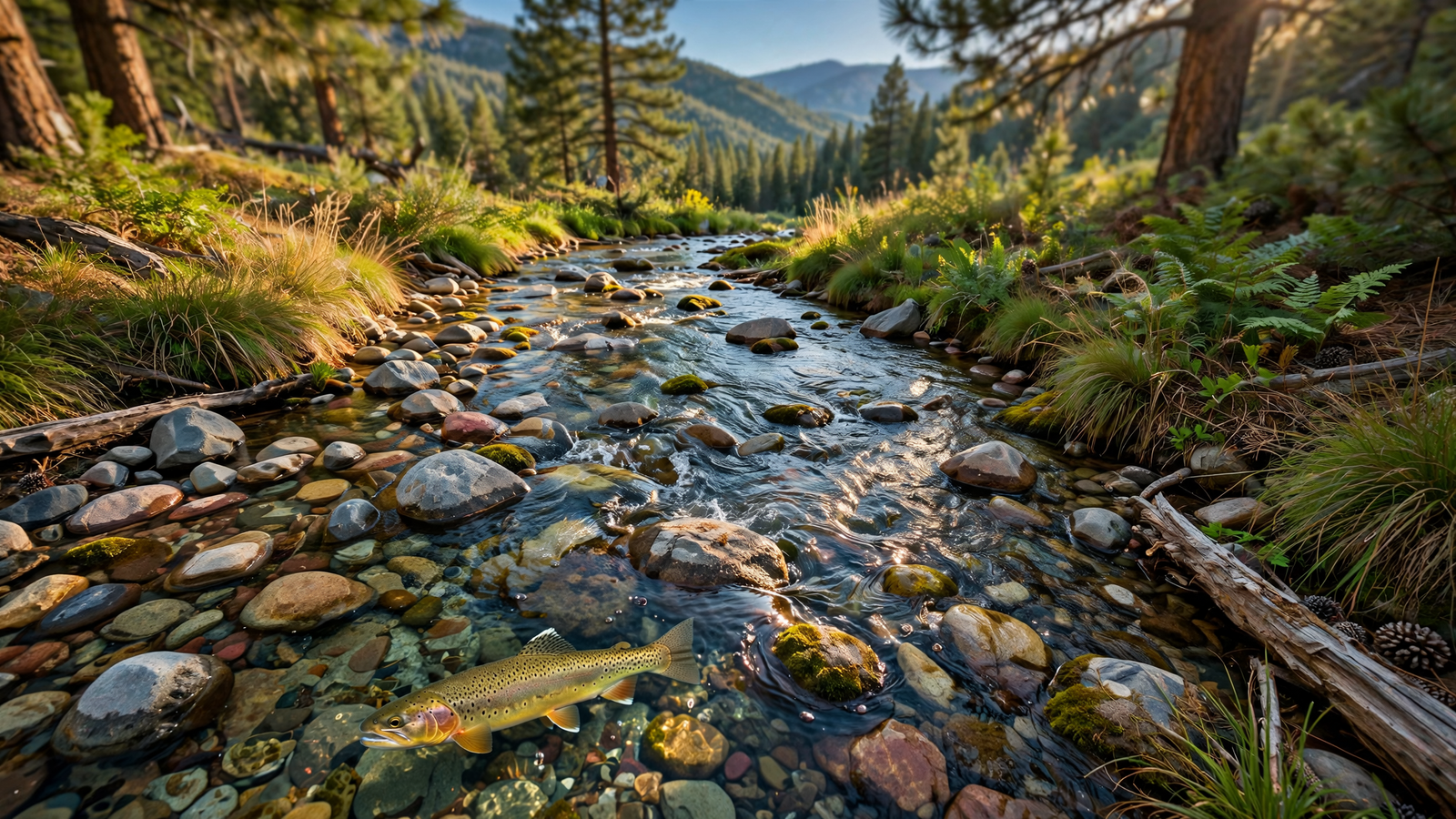
High in eastern Arizona, where mountain streams run cold through forests of spruce, fir and ponderosa pine, a small fish is carrying a much larger story.
The Apache trout is Arizona’s state fish and one of the rarest trout in the United States. Its native range is limited to the upper watersheds of the Little Colorado and Salt rivers in the White Mountains. For much of the 20th century, the fish faced a combination of pressures that could have erased it from those waters altogether: introduced trout, habitat damage, drought, wildfire and the fragmentation of its stream habitat.
Yet the Apache trout has not disappeared. Through hatchery production, stream restoration, barriers that limit competing fish and long-term monitoring, Arizona wildlife managers and federal partners have expanded the fish’s foothold. The recovery is not complete, and the species remains federally protected. But its progress offers an unusually clear example of what conservation looks like when success is measured in decades rather than headlines.
A fish found in one corner of Arizona
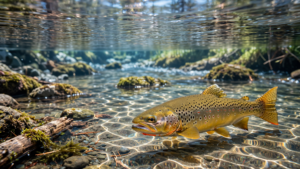
Apache trout are members of the salmon family, but they are distinct from the rainbow, brown and brook trout that have been introduced widely across the American West. Their coloring includes a golden-yellow body, dark spots and a distinctive black mark beneath the lower jaw—features that help identify a fish adapted to the clear, cold streams of the White Mountains.
Those streams are more than scenic habitat. They are the remaining pieces of a much larger native range that was narrowed by development, livestock impacts, road construction, erosion and changes in stream conditions. Non-native trout also created a biological problem. Some introduced species compete with Apache trout for food and habitat; others can interbreed with them, weakening the genetic identity that makes the native fish unique.
The Apache trout was listed under the federal Endangered Species Act in the late 1960s. It was later reclassified from endangered to threatened, a sign that conservation work had reduced the immediate risk of extinction but had not made the species secure.
Recovery required more than stocking fish
Hatcheries are an important part of the effort. The Arizona Game and Fish Department raises Apache trout and uses them to establish or reinforce populations in suitable streams. Hatchery fish can provide a reserve when wild populations are small, isolated or vulnerable to a sudden event.
But stocking by itself cannot solve the problem. A stream must have the right temperature, water quality, food and shelter. It must also be large and connected enough to support a population through difficult years. That is why recovery work has involved several tools at once.
- Stream restoration: Crews and land managers improve banks, shade and in-stream habitat so cold-water fish have places to feed, hide and reproduce.
- Barrier construction: Fish barriers can keep non-native trout from moving into Apache trout habitat, while allowing managers to protect carefully selected native populations upstream.
- Genetic protection: Managers track populations and limit hybridization with introduced trout.
- Monitoring: Surveys show whether fish are surviving, reproducing and spreading without constant assistance.
- Partnerships: The work brings together Arizona wildlife officials, the U.S. Fish and Wildlife Service, the U.S. Forest Service, tribal partners, researchers and local communities.
This combination is important because the goal is not simply to see Apache trout in more places for a season. The goal is to create self-sustaining populations that can withstand ordinary fluctuations in weather, water and food without depending entirely on repeated stocking.
The White Mountains are both refuge and test
The Apache trout’s remaining habitat sits in a landscape that can look abundant from a distance. The White Mountains contain extensive forest and high-elevation country, but cold-water fish experience the region at the scale of individual streams. A short reach with warm water, a damaged bank or a blocked passage can separate one population from another.
Drought makes that vulnerability more visible. Warmer and drier conditions can reduce streamflow and raise water temperatures, leaving trout with less room to survive. Wildfire can also alter watersheds. Fire itself is a natural part of many western ecosystems, but severe burns followed by intense rain may send ash, sediment and debris into streams.
For a species with a limited range, those pressures can turn one local disturbance into a serious conservation concern. Maintaining multiple populations in different streams is therefore a form of insurance. If one population suffers, others may survive and provide a foundation for restoration.
Why native fish recovery matters beyond one species
Protecting Apache trout benefits more than a single line on a list of threatened species. The fish is an indicator of healthy, cold-water habitat. Work that keeps mountain streams shaded, connected and clean can also help aquatic insects, amphibians, birds and other native species.
There is a cultural dimension as well. The White Mountains are home to the White Mountain Apache Tribe, whose lands and waters are central to the region’s identity. Conservation decisions in the Apache trout’s range therefore involve questions of stewardship, sovereignty, recreation and the future of a living landscape—not just the management of a game fish.
The fish also illustrates a less visible side of public conservation. Many recovery projects do not produce a single dramatic moment. They involve repeated surveys, careful genetic work, hatchery schedules, stream assessments and agreements over where different fish should or should not be allowed to go. Progress can mean that a population remains stable through a dry year, or that a restored stream supports reproduction without additional stocking.
A recovery story still in progress
It would be misleading to describe the Apache trout as fully recovered. Federal protection remains in place, and the species still depends on active management. Its limited distribution leaves it vulnerable to drought, wildfire, invasive species and other changes that could quickly reverse gains.
That unfinished status is part of the lesson. Conservation is often presented as a choice between crisis and triumph, but the Apache trout occupies the more common middle ground: a species no longer on the brink it once faced, yet not safe enough to be left alone.
The work continues through habitat projects, population surveys and the careful use of hatchery-raised fish. Managers also continue to weigh how to preserve genetic diversity while creating enough separate populations to reduce the risk of a single catastrophe.
In the White Mountains, the sound of moving water can make recovery seem effortless. It is not. The trout’s continued presence reflects years of decisions made out of public view—where to build a barrier, which stream to restore, how many fish to raise and when to let a population stand on its own.
That is what makes the Apache trout’s story worth following. Arizona has not solved every problem facing its native fish, but it has shown that a species with a narrow range and a difficult history can be given more room to survive. In conservation, that room is often where hope begins.